

Discovering Bali’s mask carving tradition with Anom in Mas Village
In the heart of Bali, traditional craftsmanship continues to shape the identity of the island through generations of artisans, performers, and makers. Among these traditions, wood carving holds a special place, particularly in the village of Mas near Ubud, long known as one of Bali’s artistic centers. Here, carving is more than decoration or craftsmanship, it is deeply connected to storytelling, spirituality, ritual, and cultural expression.
During a visit to Anom’s workshop in Mas Village, we discovered a quieter and more intimate side of Bali’s creative heritage. Surrounded by carved masks, wooden sculptures, and traditional tools, the space reflects years of dedication to an art form that remains closely tied to Balinese identity and ceremonial life.
The tradition of Balinese wood carving & masks
Wood carving has been part of Balinese culture for centuries, passed down through families and villages across the island. In places like Mas Village, carving traditions remain especially strong, with many artisans learning the craft from a very young age.
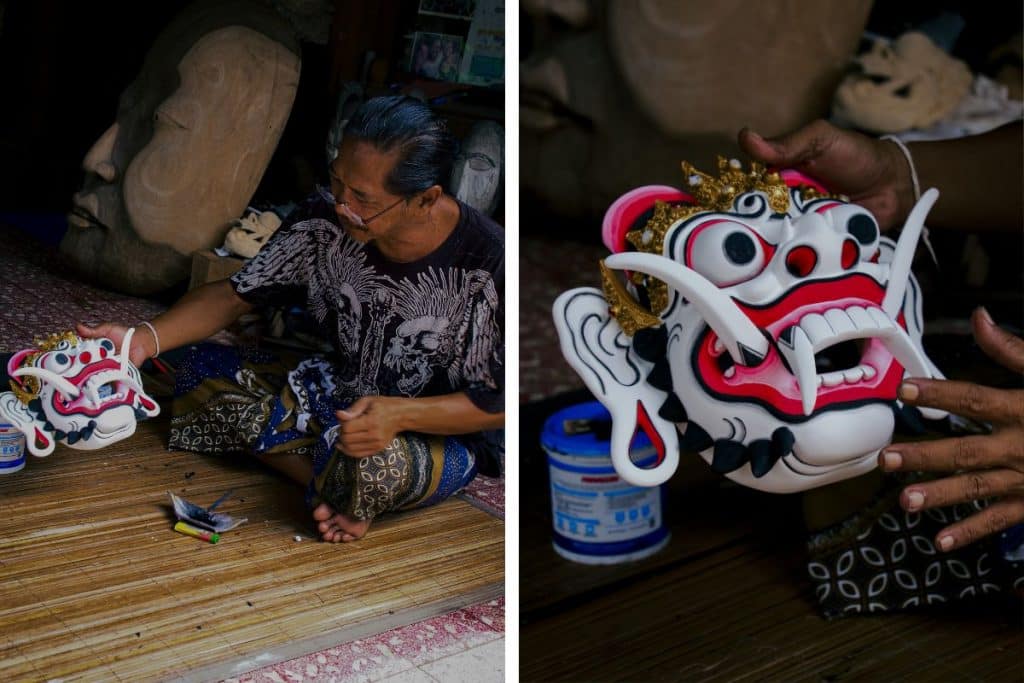
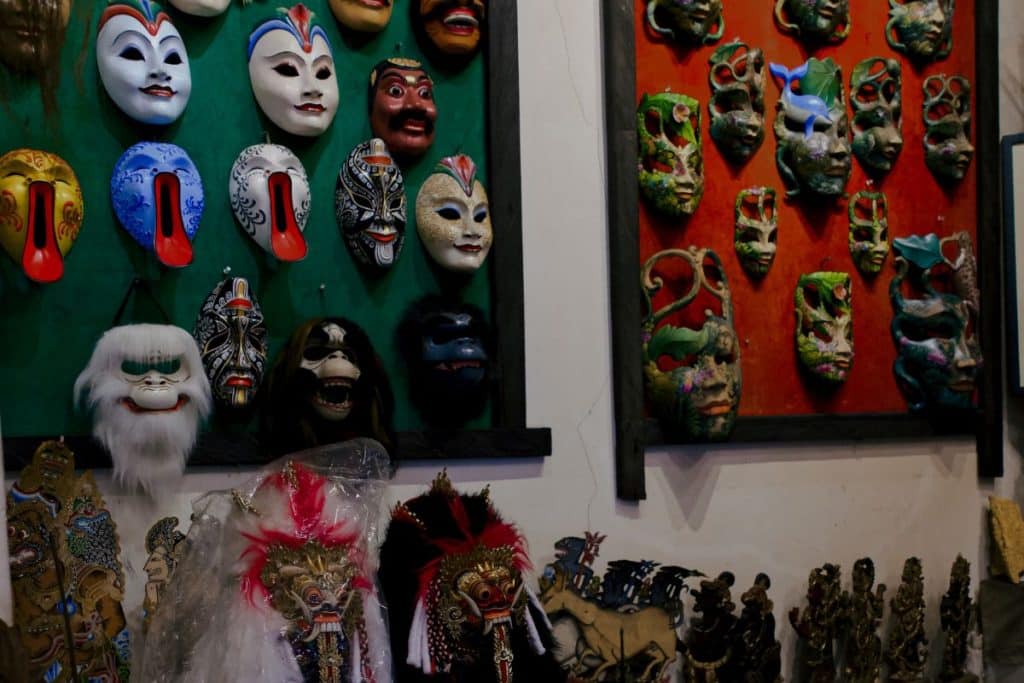
Balinese masks hold an important role within ceremonies, dances, and theatrical performances. Some represent protective spirits, mythological characters, or ancestral figures, while others are intentionally expressive, playful, or even intimidating. Through detailed facial expressions, colors, and textures, each mask carries a symbolic meaning connected to emotion, spirituality, or storytelling traditions.
Beyond their ceremonial purpose, these masks have also become a unique artistic form appreciated around the world for their intricate craftsmanship and cultural significance.
Meeting Anom & his workshop in Mas Village
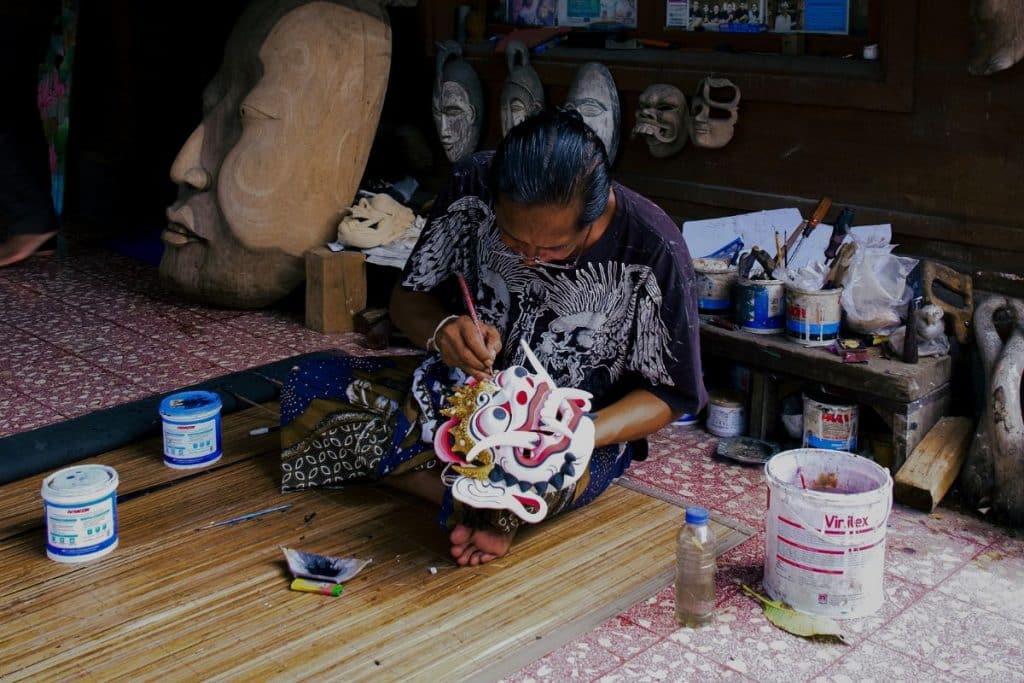
Anom has been carving since the age of nine, continuing a tradition rooted deeply within Balinese culture and village life. Over the years, his work has evolved beyond Bali, with his masks and carvings reaching collectors, exhibitions, and workshops internationally. Despite this, his workshop in Mas Village remains closely connected to traditional techniques and handmade craftsmanship.
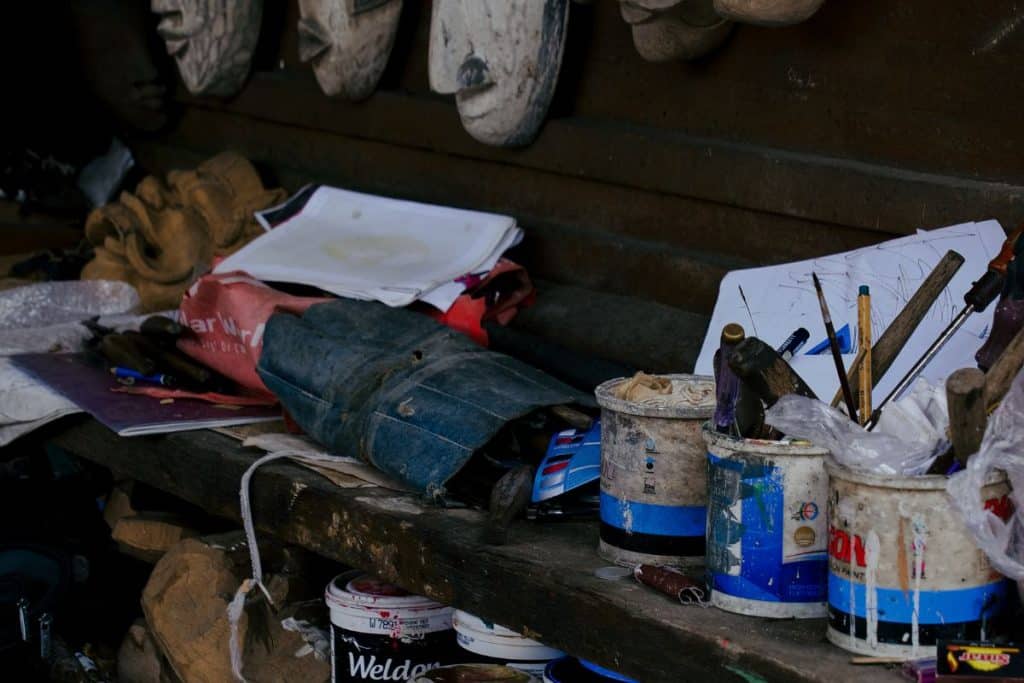
Inside the studio, shelves are filled with unfinished carvings, traditional masks, paint pigments, and handcrafted tools shaped by years of use. Visitors can join workshops to better understand the carving process firsthand, experiencing not only the technical side of the craft but also the patience and precision required behind every piece.
The atmosphere feels authentic and personal, more like entering an artist’s working space than a commercial gallery. Conversations move naturally between carving, Balinese traditions, spirituality, and the stories carried within each mask.
The craftsmanship behind Balinese mask carving
Creating a traditional Balinese mask is a long and detailed process that can take days, weeks, or sometimes even months depending on the complexity of the piece. The work begins with a solid block of wood, carefully shaped by hand using Anom’s own carving tools and traditional techniques developed through years of practice.
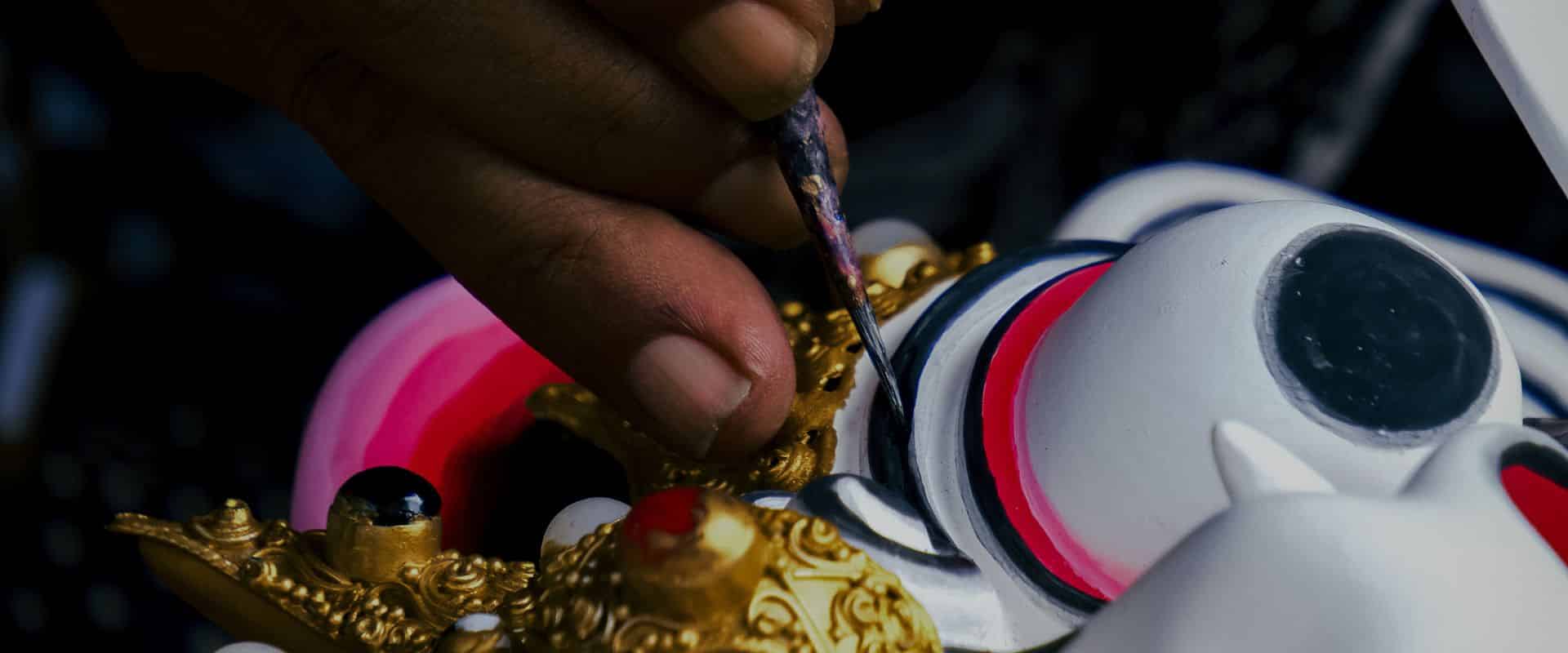
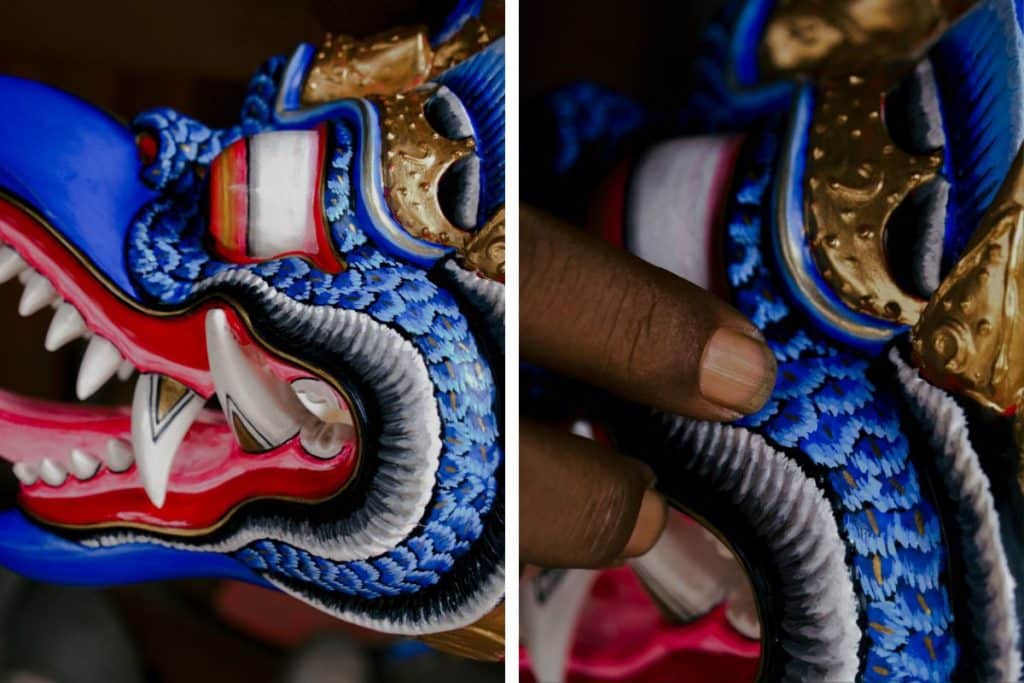
Once the rough form is completed, the mask is gradually refined through sanding and smoothing to create softer textures and more precise facial details. Layers of paint are then added carefully by hand, sometimes reaching dozens of layers to create depth, texture, and aging effects. Certain masks include gold or silver details, natural fibers, or even human-like hair to enhance their expressive character.
Every stage of the process requires patience and attention to detail. Some masks are designed to appear calm and spiritual, while others intentionally express fear, protection, or intensity through exaggerated eyes, sharp features, and dramatic colors. More than decorative objects, these masks are deeply connected to emotion, ritual, and storytelling traditions that remain present within Balinese culture today.
Experiencing the workshop
Participating in a workshop at Anom’s studio offers a rare opportunity to experience this tradition directly through the hands of a local artisan. Rather than simply observing finished pieces, visitors are introduced to the process itself, learning how the wood is shaped, understanding the symbolism behind different mask styles, and discovering the amount of work hidden behind every detail.
The experience feels slow, immersive, and deeply connected to the artistic rhythm of Bali. In a world increasingly dominated by fast production and digital culture, spaces like Anom’s workshop preserve a more human and intentional approach to craftsmanship.
Visiting Anom’s workshop in Mas Village reveals a side of Bali that often exists quietly behind the island’s landscapes and tourism. Through wood carving and mask-making, generations of artisans continue to preserve stories, emotions, and cultural traditions shaped by patience and handcraft.
More than simply creating objects, Anom’s work reflects a deeper connection between art, spirituality, and identity, offering visitors a meaningful glimpse into one of Bali’s most enduring artistic traditions.