

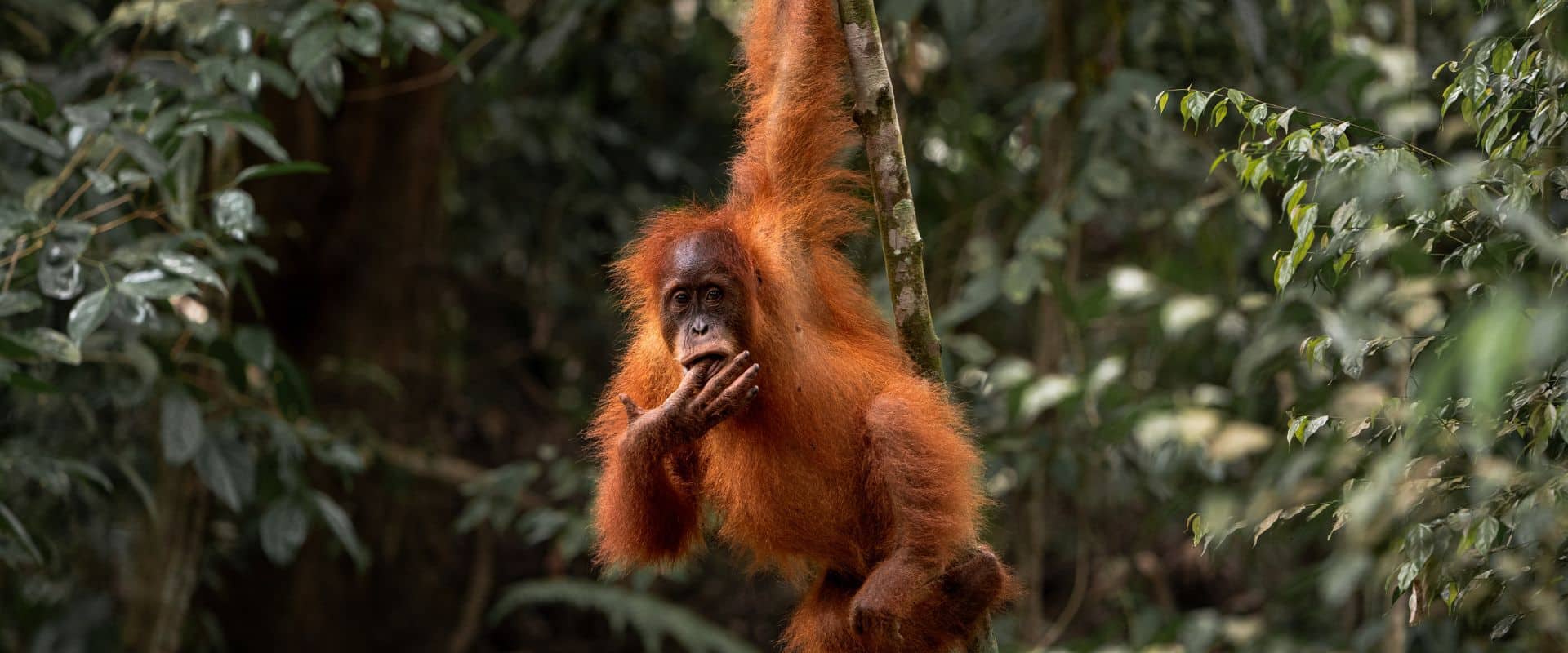
Bukit Lawang, Sumatra: Into the jungle to meet the Orangutans
Sumatra is one of those places that feels wonderfully far away from the Indonesia most travellers know. The island is vast, wild and incredibly diverse, with volcanoes rising above tropical forests, enormous lakes surrounded by mountains, remote islands, traditional villages and some of the richest wildlife habitats in Southeast Asia. From the Batak communities around Lake Toba to the forests of North Sumatra, travelling through the island feels less like ticking off destinations and more like slowly discovering a completely different side of Indonesia.
In the north of the island, there is a small riverside village that has become one of the most famous gateways to the Sumatran rainforest: Bukit Lawang. Sitting on the edge of the Gunung Leuser National Park, Bukit Lawang is where you come to trade roads for jungle trails and spend hours walking beneath the canopy in search of one of the world’s most fascinating animals: the Sumatran orangutan. But the experience goes far beyond seeing orangutans. Between jungle trekking, river tubing, waterfalls, local handicrafts and nights spent beneath the sounds of the rainforest, Bukit Lawang is a place where the jungle becomes the centre of the journey.
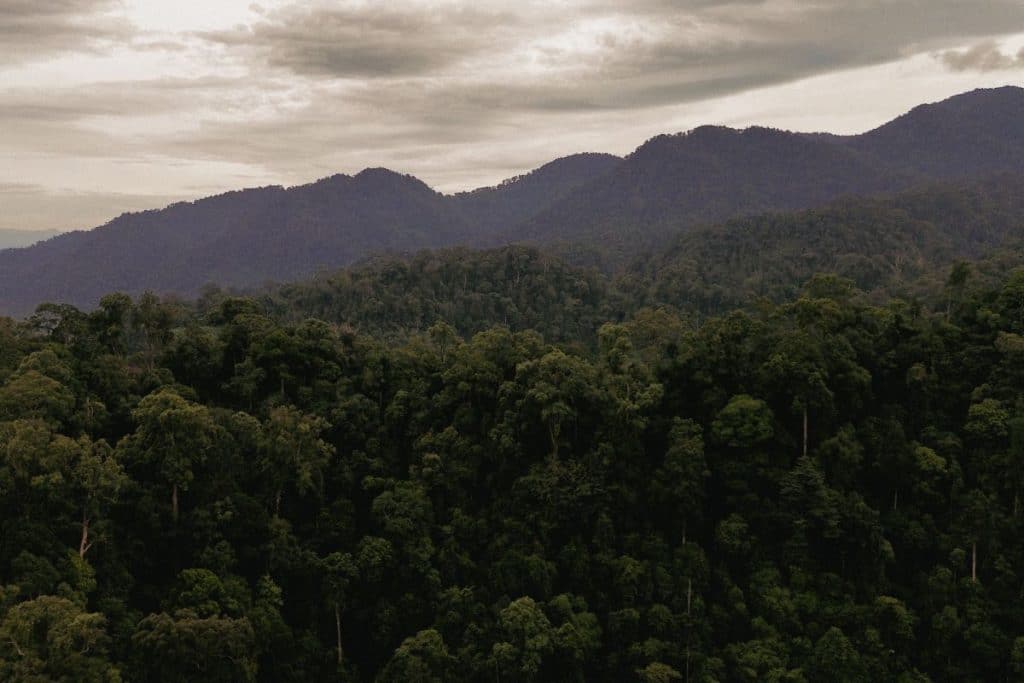
Sumatra: one of Indonesia's last great wildernesses
Sumatra is Indonesia’s sixth-largest island and one of the most biologically important regions in the entire country. Running along much of the western side of the island is the Bukit Barisan mountain range, a volcanic spine that shapes Sumatra’s landscapes. The result is an extraordinary variety of environments, from lowland tropical rainforest and mangroves to mountain forests, volcanic lakes and remote coastal areas. North Sumatra alone offers an incredible concentration of experiences, from Medan and the traditional Batak lands around Lake Toba to the wild forests surrounding Gunung Leuser.
What makes Sumatra particularly remarkable, however, is what lives inside these forests. The Tropical Rainforest Heritage of Sumatra, a UNESCO World Heritage site made up of Gunung Leuser, Kerinci Seblat and Bukit Barisan Selatan National Parks, covers more than 2.59 million hectares. UNESCO estimates that the protected area contains around 10,000 plant species, more than 200 mammal species and approximately 580 bird species. Among them are some of the most endangered animals in Indonesia, including the Sumatran orangutan, Sumatran tiger, Sumatran rhinoceros and Sumatran elephant.
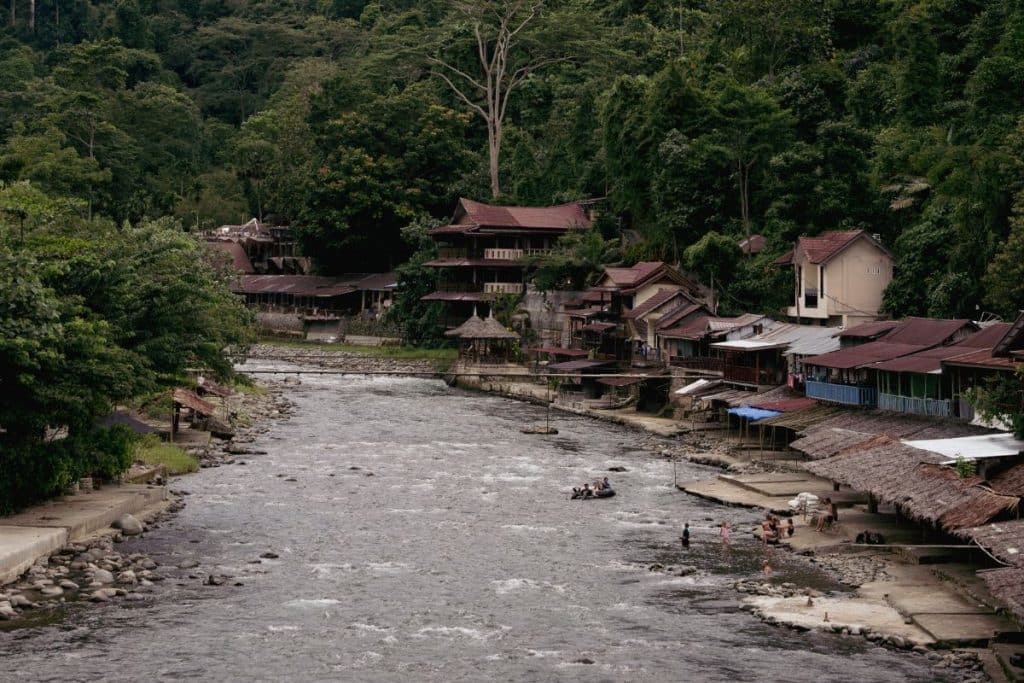
Bukit Lawang: the gateway to Gunung Leuser
Bukit Lawang is a small village built along the Bohorok River, approximately 90 kilometres northwest of Medan. Its location is what makes it so special: the village sits right at the entrance to the Gunung Leuser National Park, meaning that the transition from everyday life to rainforest happens incredibly quickly. Guesthouses, cafés and small local shops line the river, while just beyond the village the landscape becomes steep, muddy and completely green. From here, the only way deeper into the forest is on foot.
The easiest way to reach Bukit Lawang is by road from Medan, with the journey taking around three to four hours depending on traffic and road conditions. Public buses are available from the Pinang Baris area, while private cars and shared transfers are a more comfortable option, especially if you are travelling with luggage or arriving from Kualanamu International Airport. As you leave Medan behind, the busy city roads gradually give way to plantations, farmland and small villages, until the landscape becomes increasingly green. Eventually, you arrive in Bukit Lawang, a small jungle village along the Bohorok River where the rainforest begins just beyond the houses.
Orangutans and the incredible Gunung Leuser rainforest
The real magic of Bukit Lawang begins when you enter the Gunung Leuser National Park, one of Southeast Asia’s most important rainforest landscapes. Covering around 1.09 million hectares, the park is part of the UNESCO-listed Tropical Rainforest Heritage of Sumatra and protects an extraordinary ecosystem home to Sumatran orangutans, gibbons, macaques, elephants, tigers, rhinoceroses, slow lorises and hundreds of species of birds, reptiles and insects. The Sumatran orangutan (Pongo abelii) is perhaps its most iconic resident. Endemic to the island and critically endangered, these intelligent great apes spend much of their lives high in the canopy, moving slowly between trees, feeding on fruit and leaves and building nests where they sleep. Watching one appear between the branches, completely surrounded by rainforest, is one of those wildlife encounters that stays with you long after leaving Sumatra.
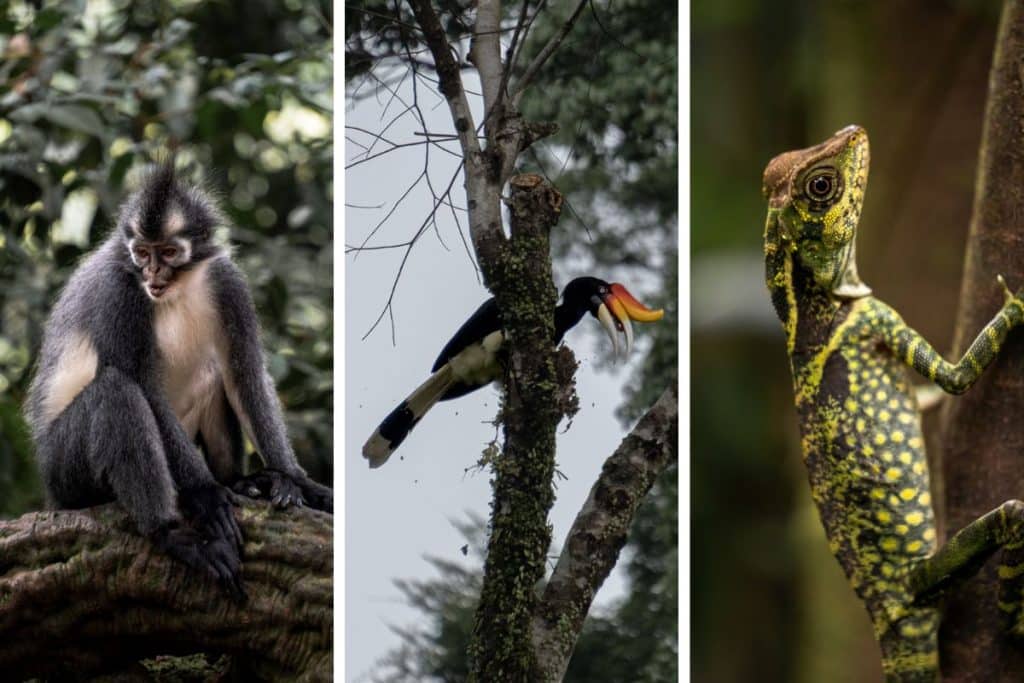
But the orangutans are only one part of what makes this forest so extraordinary. As you walk deeper into Gunung Leuser, you begin to notice the smaller details: the call of a gibbon somewhere in the distance, macaques moving through the canopy, hornbills flying above the trees or freshly eaten fruit scattered on the forest floor. The wider ecosystem is also home to some of Indonesia’s most endangered animals, including the Sumatran tiger, Sumatran rhinoceros and Sumatran elephant, although encountering these species in the wild is extremely rare and should never be expected on a short trek. Instead, experienced guides may sometimes spot tracks, footprints or other signs of their presence. This is what makes the experience feel so different from a traditional wildlife attraction: you are entering a genuinely wild ecosystem where animals are free to move wherever they choose.
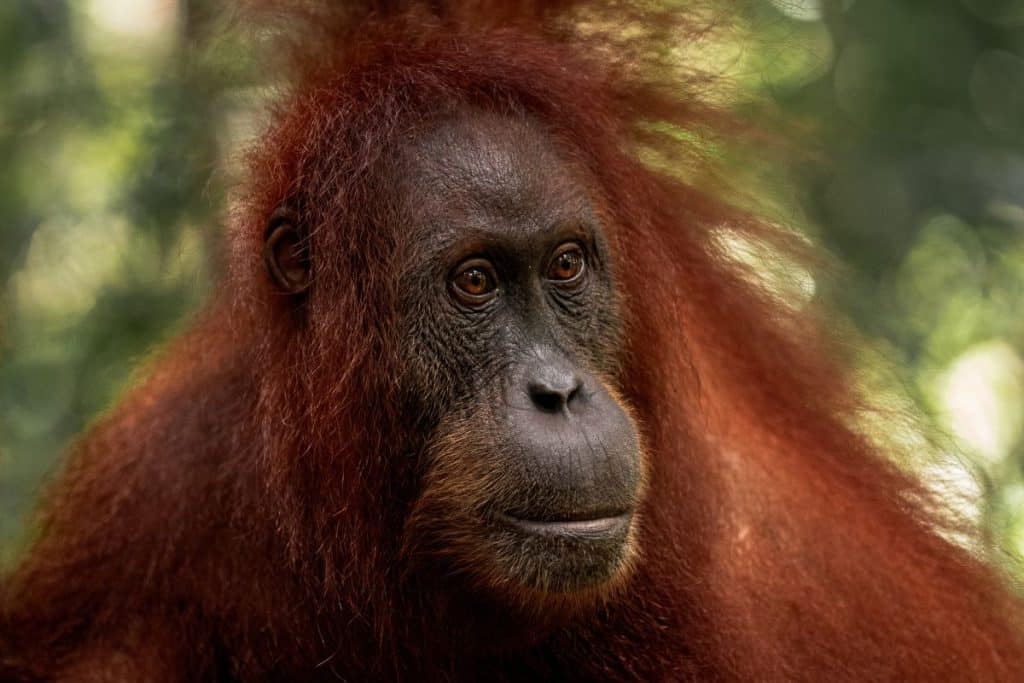
Exploring the Sumatran rainforest with Sumatra Orangutan Explore
For our jungle experience, we chose Sumatra Orangutan Explore, a local trekking company based in Bukit Lawang that focuses on responsible wildlife encounters, rainforest conservation and community-based tourism. There are several ways to experience the rainforest, from a 3-hour ethical trek followed by tubing back to the village, to full one-day and multi-day expeditions lasting up to five days. The one-day trek takes around 6–7 hours of walking, while longer trips take you progressively deeper into the forest, with nights spent in simple jungle camps, river crossings, swimming, waterfalls, tubing and, on some itineraries, night walks. The longer you stay, the less the experience feels like a simple excursion and the more you become immersed in the rhythm of the rainforest.
Of course, the big question is whether you will actually see an orangutan. Wildlife can never truly be guaranteed in a natural environment, but Sumatra Orangutan Explore states that its three-hour trek has a 98% chance of observing semi-wild orangutans that have been rehabilitated into the forest. The idea is not to make the orangutans come to you, but to quietly observe them behaving naturally in their own environment.
Spending several days in the jungle takes the experience to another level. Beyond the orangutans themselves, this is what makes the experience so memorable: waking up surrounded by rainforest, following its trails for several days and experiencing Gunung Leuser not as a backdrop, but as a living ecosystem.
What to do in Bukit Lawang beyond orangutan trekking
Although the orangutans are undoubtedly the main reason people travel to Bukit Lawang, there is much more to do here than simply join a jungle trek. The Bohorok River is at the heart of the village and offers one of the most enjoyable ways to experience the landscape: tubing and rafting. After spending hours walking through the humid rainforest, floating downstream through the river is the perfect contrast. The surrounding jungle, rocks and fast-moving sections of water turn the journey back to the village into an adventure of its own. Indonesia’s official tourism board also highlights rafting as one of the area’s main activities.
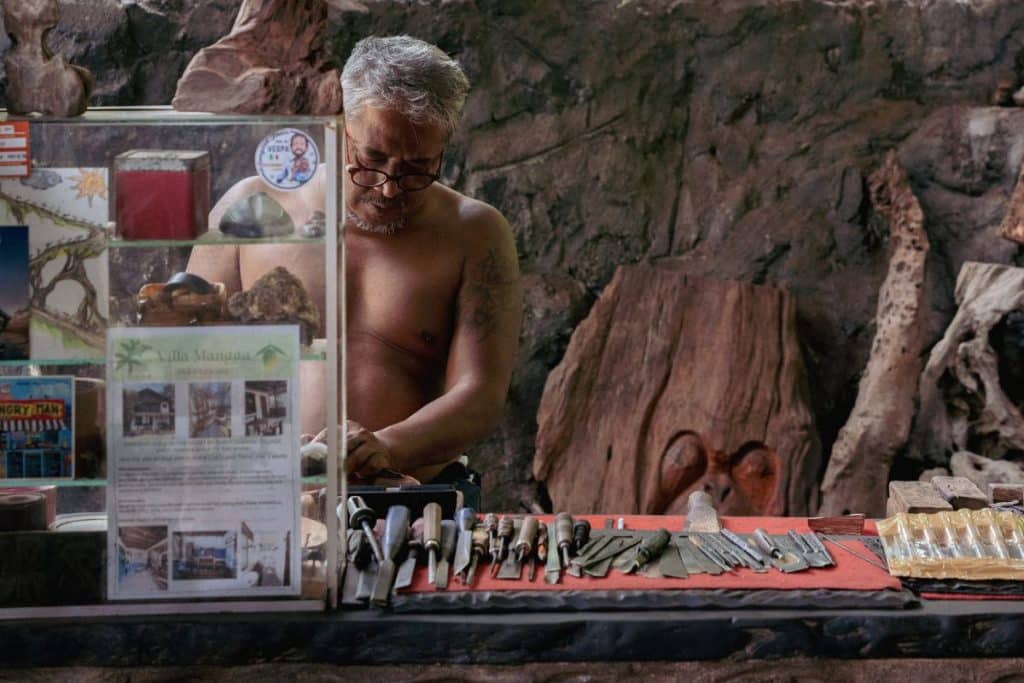
Bukit Lawang is also a great place to slow down and discover local crafts. If you want something more creative than another day of hiking, you can join workshops in wood carving, bamboo weaving or coconut-shell carving. Wood carving is particularly interesting because local artisans can work with reclaimed wood collected from rivers and rice fields around the area, turning it into handmade souvenirs rather than using newly cut timber. Depending on the workshop, you can spend a few hours or even several days learning how to carve your own piece, from small animals to signs and decorative objects.
There are also opportunities to explore the surrounding countryside, visit caves, discover local villages and learn more about everyday life around Bukit Lawang. Cooking classes, village experiences and visits to small local farms can offer a different perspective on the region. The idea is not simply to use Bukit Lawang as a base for the jungle, but to understand the community that has developed alongside it.
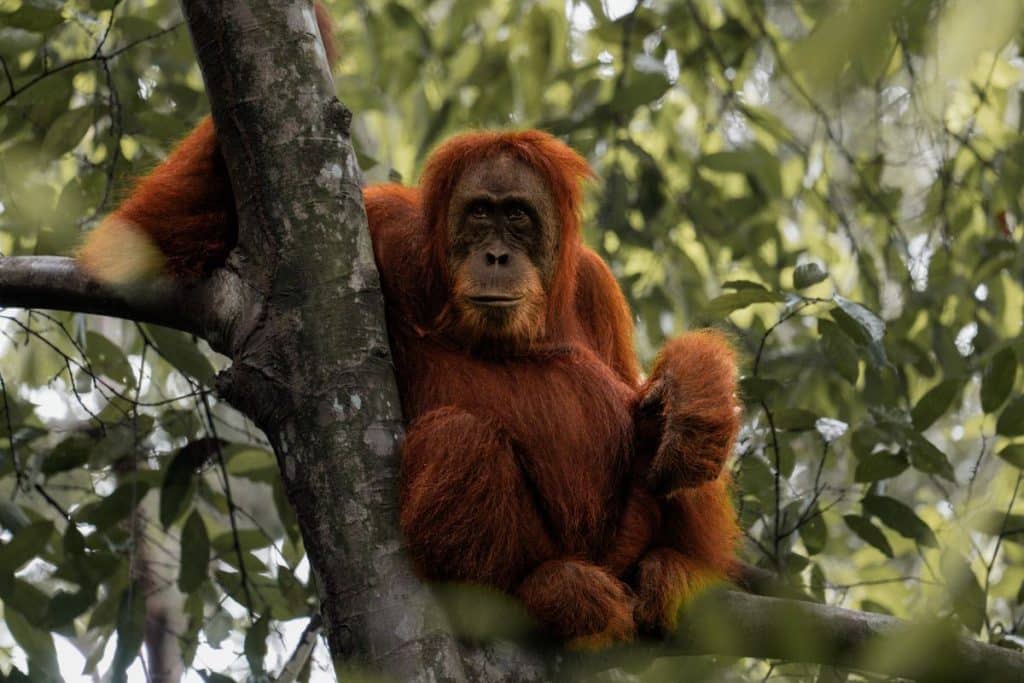
Bukit Lawang is much more than an orangutan destination. It is a place where you can experience one of Indonesia’s most extraordinary rainforests while discovering the community that has grown around it. You can spend the morning walking through the jungle, the afternoon floating down the Bohorok River, learning traditional wood carving or swimming beneath a waterfall, before falling asleep to the sounds of the rainforest. But Sumatra has another side to discover, one that takes you far beyond the jungle and deep into the traditions of the people who have called this island home for generations.
If the orangutans of Gunung Leuser offer a glimpse into the wild heart of Sumatra, the Mentawai Islands offer a glimpse into its cultural soul. Far off the western coast of the island, on remote Siberut Island, the Mentawai people have preserved traditions deeply connected to the forest, rivers and land. After exploring Sumatra’s wilderness in Bukit Lawang, travelling to Siberut means continuing the journey in a completely different way: leaving the jungle trails behind to spend several days living alongside the Mentawai people, sharing their daily life, learning from their traditions and experiencing a side of Sumatra that few travellers ever get to see.