

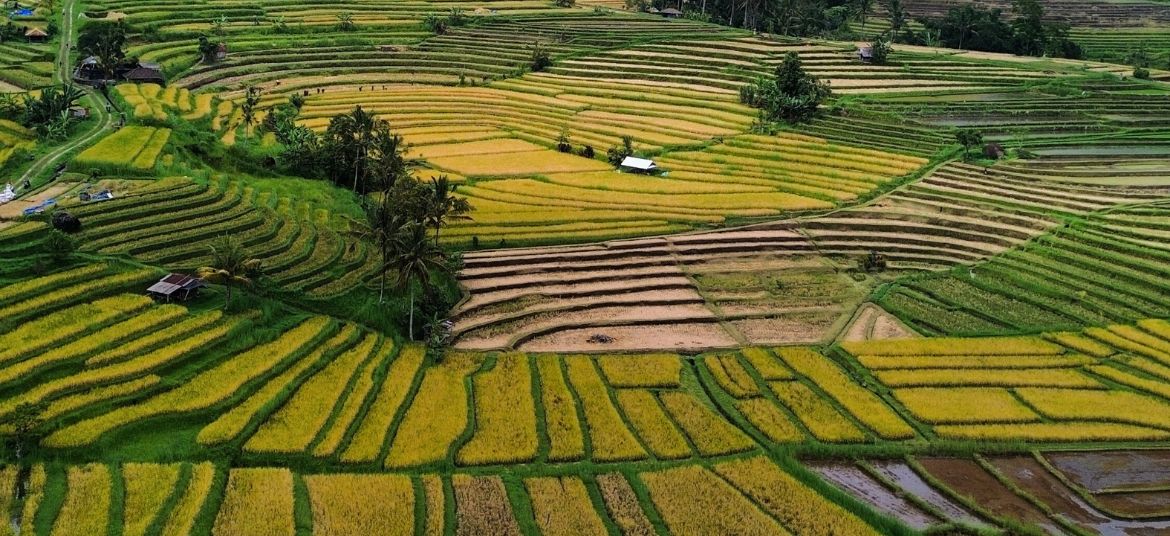
Jatiluwih Rice Terraces a living UNESCO landscape in Bali
Set in the heart of Bali’s highlands, Jatiluwih Rice Terraces offer one of the island’s most expansive and immersive rice field landscapes. Far from the busier viewpoints found elsewhere, Jatiluwih unfolds slowly, through winding paths, layered greens, and the quiet rhythm of daily agricultural life.
Recognized as a UNESCO World Heritage site, this area is not only visually striking but deeply rooted in Balinese culture, spirituality, and communal living.
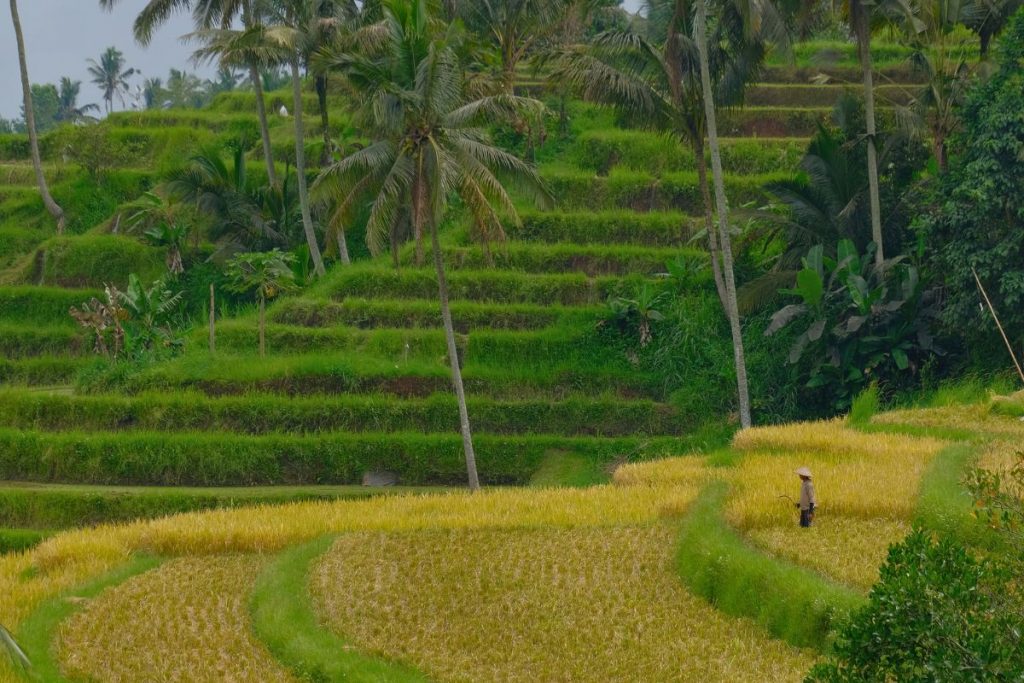
What makes Jatiluwih a UNESCO world heritage site
To reach Nusa Lembongan, you can take a fast boat from Sanur Harbor, located in southeastern Bali. Several boat operators run daily services, with the crossing taking approximately 30 to 40 minutes. Tickets may include pick-up from your hotel in Bali, making the journey smooth and convenient. Once on the island, transportation is simple. Taxis are available, but renting a motorbike offers more flexibility to explore at your own pace. Bicycles are another eco-friendly option, especially for those staying on the flatter parts of the island or wanting to explore Ceningan slowly.
It’s important to note that while some hotels and restaurants accept credit cards, you should carry cash as well. ATMs exist on the island, but they’re not always reliable or easy to access. Having Indonesian rupiah on hand will save you the trouble, especially when dealing with small shops, warungs, or paying for activities. Also, mobile data can be patchy in certain areas, so download your maps and key travel info in advance if needed.
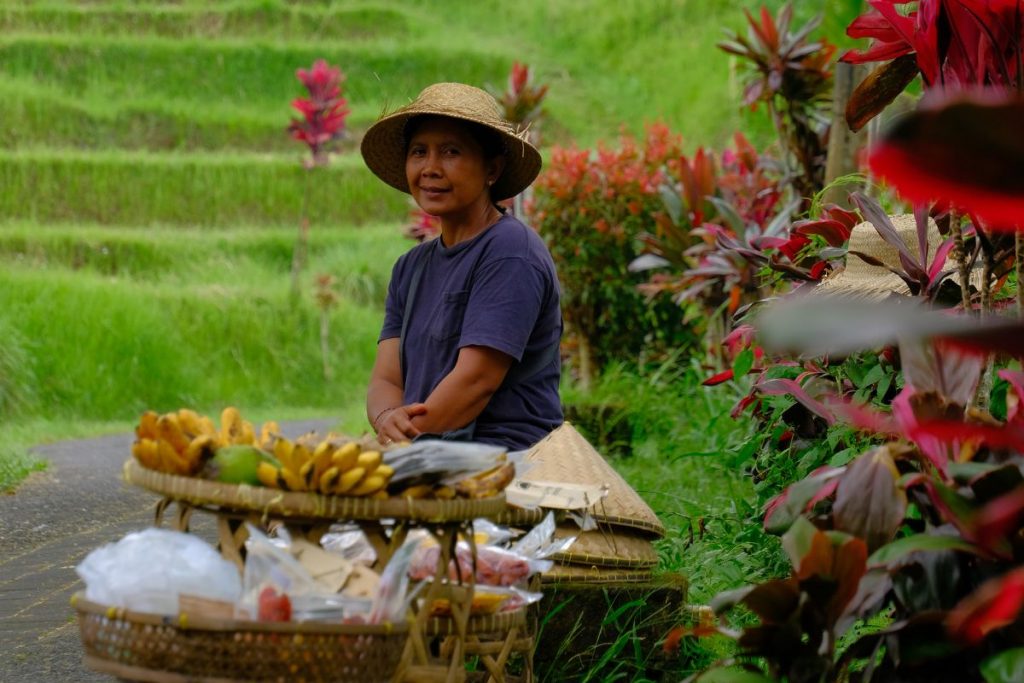
Exploring the Rice Fields: Paths & Walks
One of Jatiluwih’s strengths lies in its variety of walking paths, suitable for different levels and interests.
You’ll find:
- Short loop walks (30–45 minutes) offering panoramic views
- Longer routes (1.5–3 hours) that weave deep into the terraces
- Elevated paths along the hillsides and flatter trails between paddies
These paths allow visitors to move at their own pace, stopping at small warungs, shaded rest points, or quiet viewpoints overlooking endless layers of rice fields. Early morning and late afternoon are particularly pleasant, with softer light and fewer visitors. Comfortable shoes are recommended, especially during the rainy season when paths can become muddy.
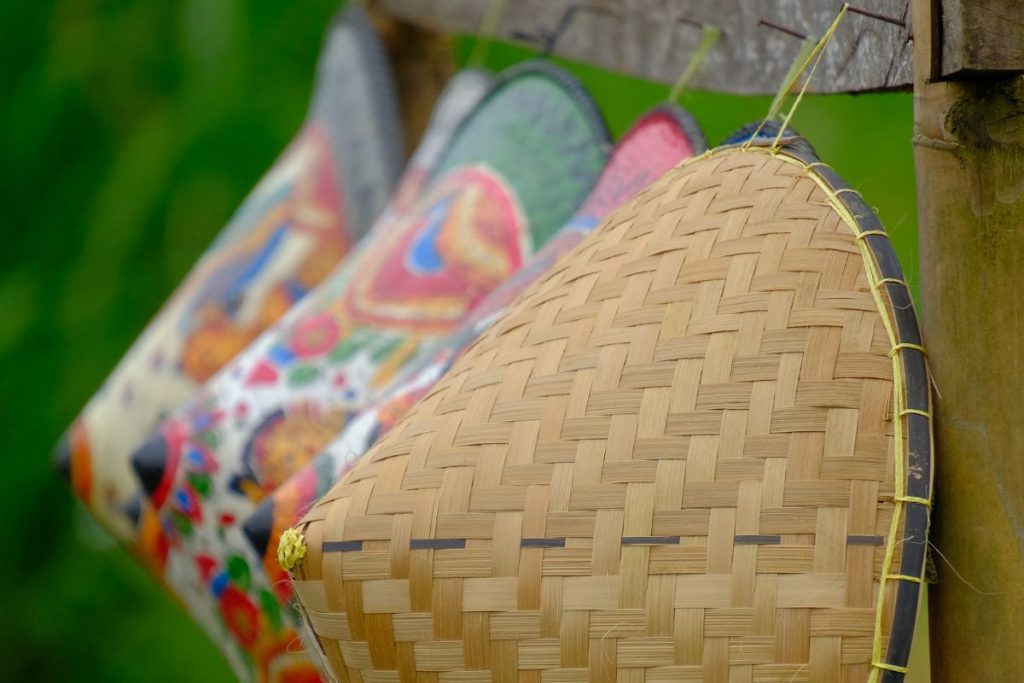
Life in the rice fields: Farmers & daily rhythms
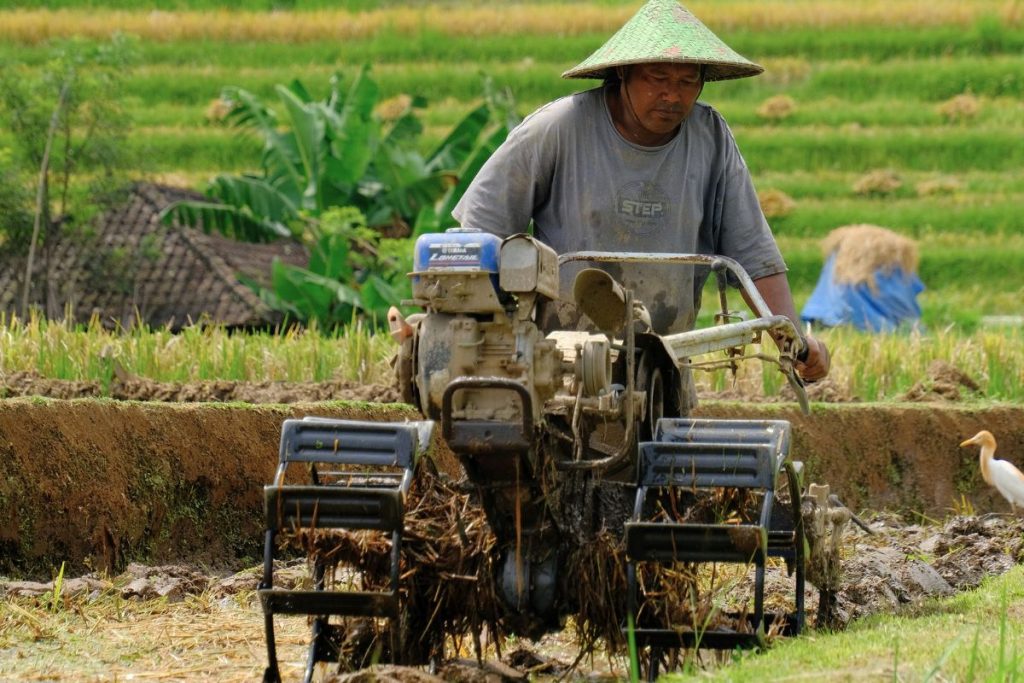
Beyond its landscapes, Jatiluwih is very much a living place. Farmers work the fields by hand, planting, harvesting, and maintaining the paddies according to seasonal cycles. You may see locals tending young rice shoots, guiding water channels, or carrying tools along narrow paths.
This daily activity is not staged, it is simply life continuing as it has for centuries. Observing these moments adds depth to the visit, offering a quiet insight into the relationship between the Balinese people and their land.
Visitors are encouraged to remain respectful:
- Stay on marked paths
- Avoid stepping into active fields
- Observe without interrupting work
Seasons, light & when to visit
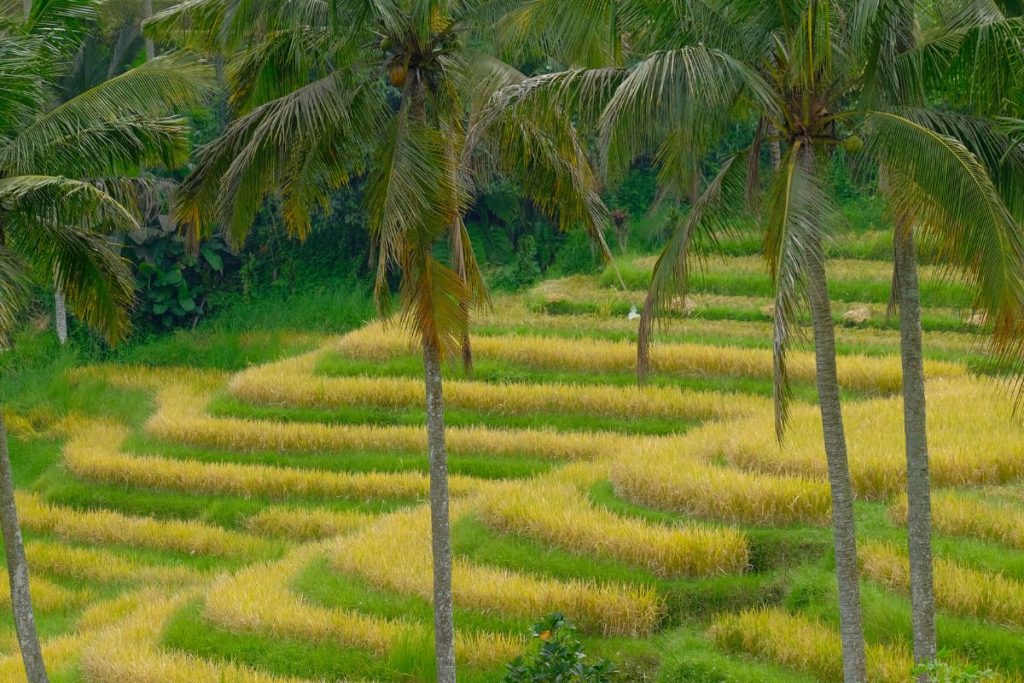
Jatiluwih changes noticeably throughout the year, shaped by agricultural cycles and natural light. During the growing season, the rice fields appear in layered shades of green, with water-filled paddies reflecting the sky and surrounding hills. As harvest time approaches, the landscape becomes drier and warmer in tone, revealing the structure of the terraces and the paths that connect them.
Light also influences how the site is experienced. Early mornings often bring softer light and occasional mist, while late afternoons create warmer hues and longer shadows across the fields. These shifts make each visit slightly different, encouraging slower walks and quiet observation rather than a single, fixed viewpoint.
Jatiluwih vs Tegalalang
Bali is home to several rice terrace landscapes, each offering a different experience. Jatiluwih stands out for its scale and openness, stretching across wide valleys and hillsides rather than concentrating around a single viewpoint. The terraces here feel expansive and immersive, inviting visitors to walk through the fields rather than observe them from above.
In contrast, places like Tegalalang Rice Terraces are more compact and visually immediate. Their proximity to Ubud makes them easy to access, but also more frequented. While these smaller terraces offer striking compositions, Jatiluwih provides a slower, more contemplative encounter, where space, distance, and quiet play a central role in the experience.
Jatiluwih is not just a scenic stop, but an experience rooted in time, tradition, and balance. Its vast scale, combined with its calm atmosphere and cultural significance, makes it one of Bali’s most meaningful landscapes. For those seeking a deeper connection to the island, away from crowds and curated viewpoints, Jatiluwih offers space to walk, observe, and slow down, surrounded by one of Bali’s most enduring natural and cultural treasures.