

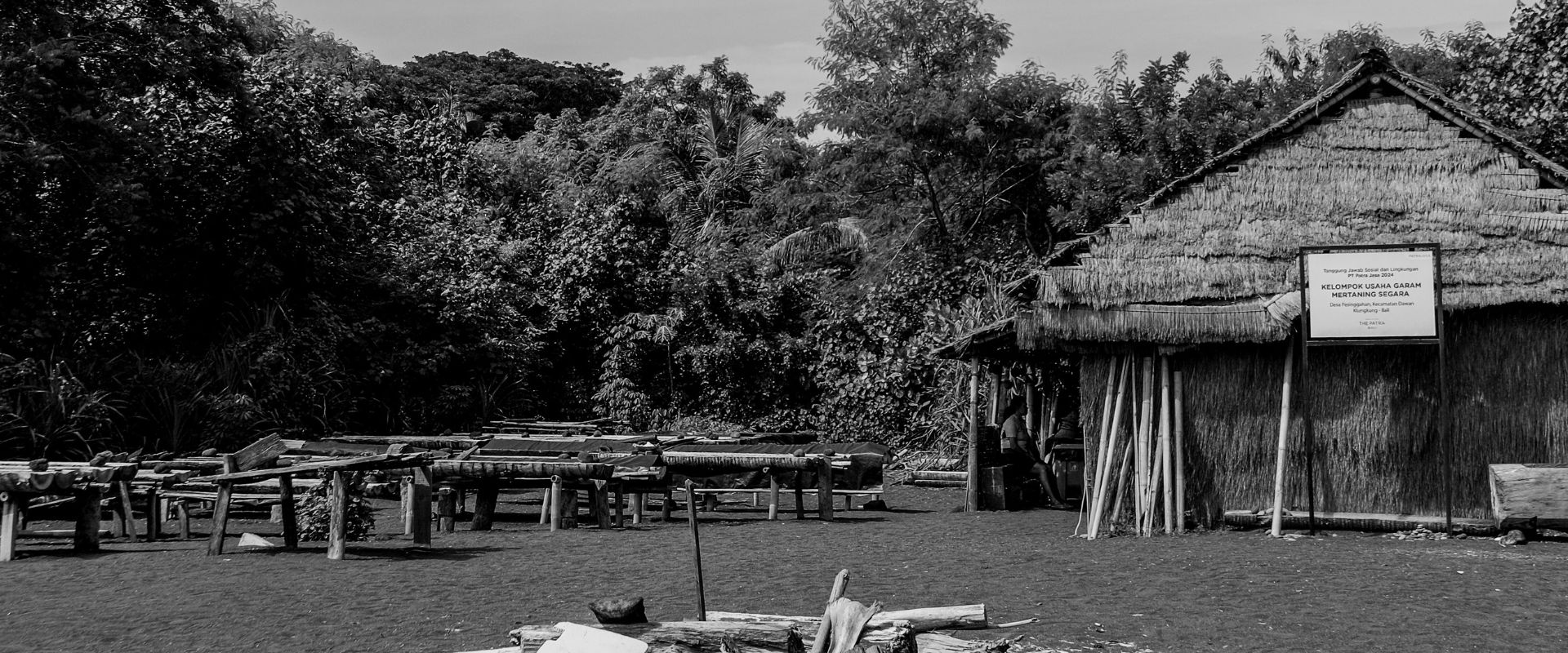
Discover Bali’s Traditional Salt Farms
Along Bali’s eastern coastline, far from the island’s cafés and beach clubs, a quieter rhythm continues beside the sea. In small coastal villages, generations of salt farmers still work under the sun using traditional methods that have changed little over time. Here, salt is not simply harvested. It is shaped slowly through patience, weather, and an intimate understanding of the ocean.
Among these places, Pesinggahan Natural Salt Farmer offers a rare glimpse into one of Bali’s oldest coastal traditions. Set near the black sand shores of East Bali, this small family-run salt farm reflects a way of life deeply connected to nature. Without large machines or industrial systems, the process remains entirely manual, preserving both the authenticity of the craft and the quiet atmosphere surrounding it.
Salt Farming in Bali
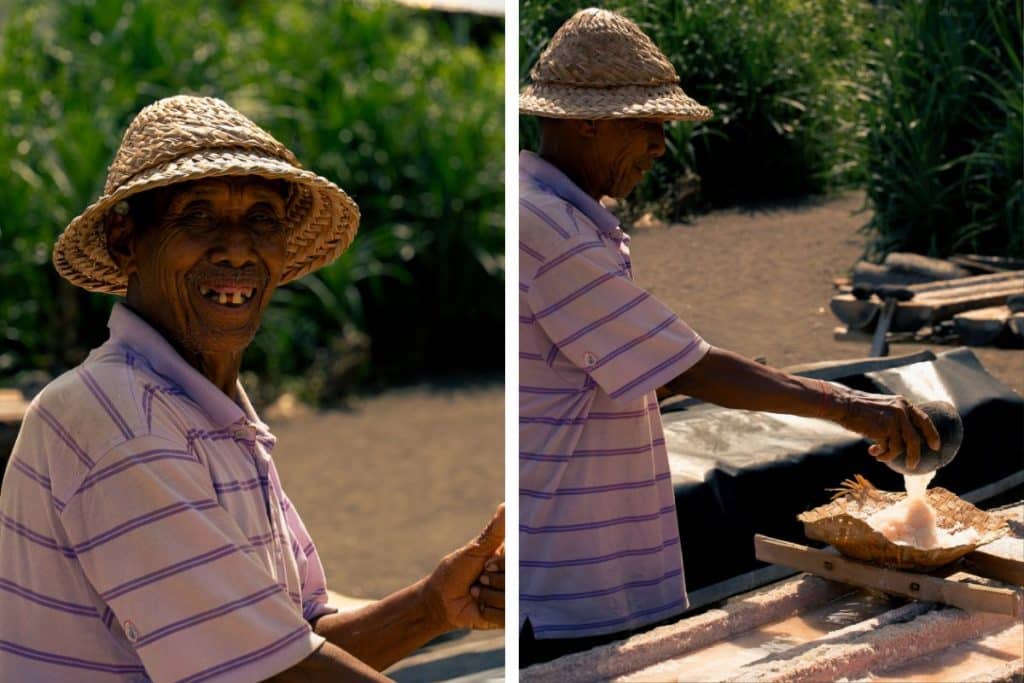
Salt farming has existed in Bali for centuries, particularly along the island’s eastern and northern coastlines where dry climates and strong sunlight create ideal conditions for evaporation. Long before tourism reshaped parts of the island, coastal communities relied on salt production as both a livelihood and an essential resource for daily life. Even today, traces of this tradition remain visible across villages where wooden tools, drying beds, and baskets still line the shore.
Unlike industrial salt production, traditional Balinese salt farming is deeply physical and dependent on natural elements. The process follows the rhythm of the tides, sunlight, and wind, meaning each day’s production can change entirely depending on weather conditions. During the dry season, salt farms become especially active as farmers begin collecting seawater from early morning until late afternoon under intense heat.
Discovering Pesinggahan Natural Salt Farmer
Pesinggahan Natural Salt Farmer remains one of the few places where visitors can still observe this process on a smaller and more personal scale. The farm is family-run, quiet, and largely untouched by large tourism developments. Rather than presenting itself as a polished attraction, the experience feels authentic and grounded in everyday life. The atmosphere is simple, shaped by black volcanic sand, ocean air, and the repetitive gestures of the farmers working under the sun.
What makes Pesinggahan particularly special is the closeness visitors can have with the process itself. Farmers often explain each stage directly while continuing their work, creating an experience that feels more human than performative. There is no rush, no staged production, only a slow rhythm where tradition continues naturally beside the sea. The surrounding landscape adds to this feeling, with Mount Agung often visible in the distance and fishing boats occasionally passing along the coastline.
How Traditional Balinese Salt Is Made
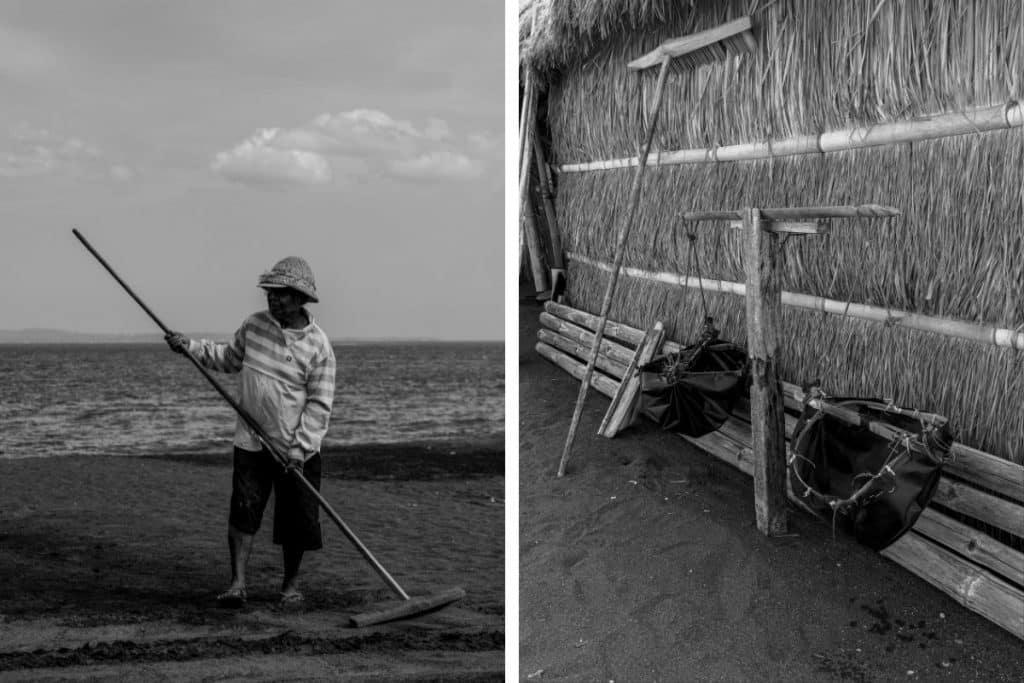
The process begins with seawater collected directly from the ocean using buckets carried by hand. This water is poured over black volcanic sand spread across the beach. Under the heat of the sun, the sand absorbs the salt while the water slowly evaporates. Once enough salt concentration has formed, the sand is gathered and filtered again using seawater to create an even more concentrated brine.
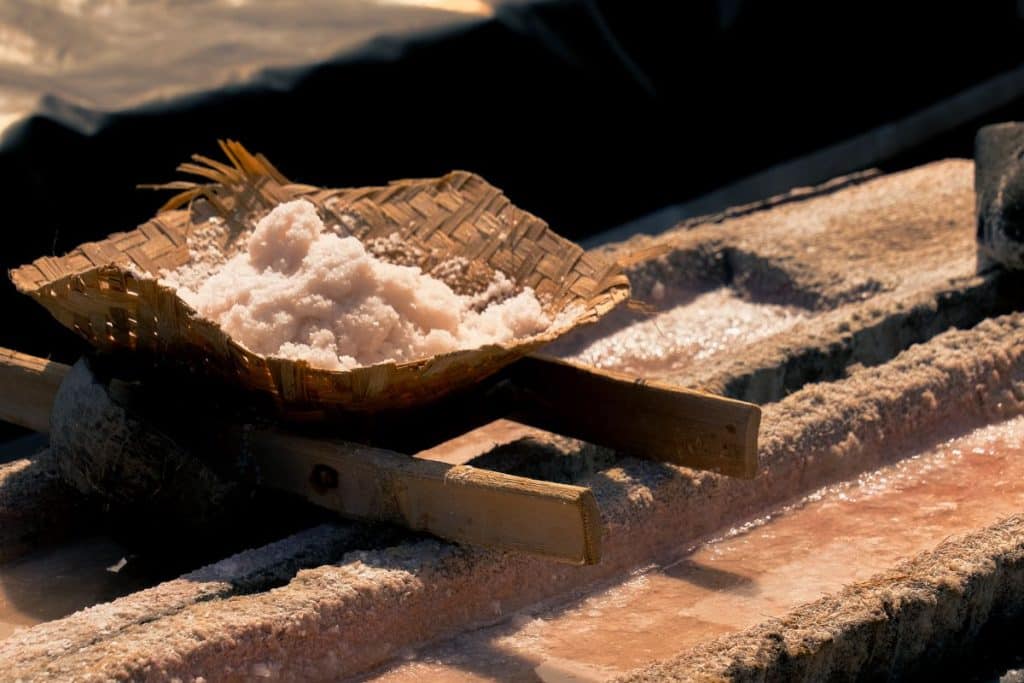
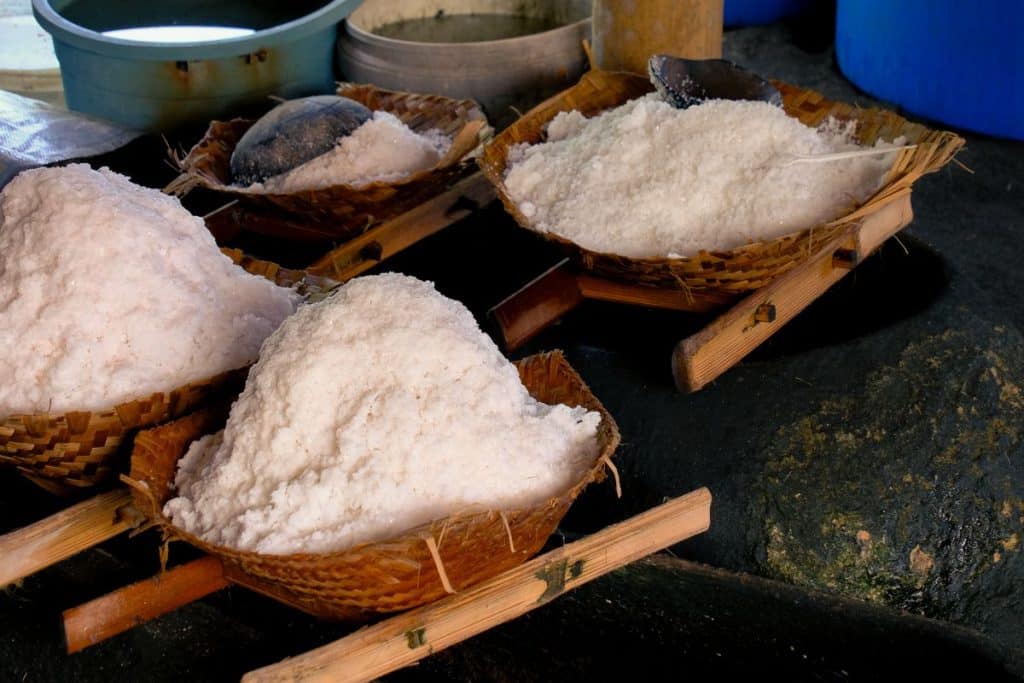
This liquid is then transferred into long wooden troughs or hollowed coconut trunks where evaporation continues naturally for several days. As the remaining water disappears, salt crystals slowly begin to appear. The entire process relies almost entirely on sun, wind, temperature, and timing. Without these conditions aligning properly, production becomes difficult or impossible. What emerges at the end is a softer and more mineral-rich salt, shaped not by machines, but by environment and patience.
Daily Production and the Future of Salt Farming
At smaller farms like Pesinggahan, production remains limited. Depending on weather conditions, a farmer may only produce a few kilograms of salt per day. Much of this salt is sold locally to restaurants, markets, or visitors looking for naturally harvested sea salt directly from the source. Because the process is manual and time-intensive, quantities remain small compared to larger commercial operations.
Further north-west in Bali, places like the salt farms of Pejarakan operate on a broader scale, with larger drying areas and a more structured production system. While still connected to traditional techniques, these farms produce significantly higher quantities and supply a wider commercial network. The contrast between Pejarakan and Pesinggahan reveals two different realities of salt farming in Bali today: one preserving intimate family craftsmanship, the other adapting to larger demand while maintaining part of its traditional roots.
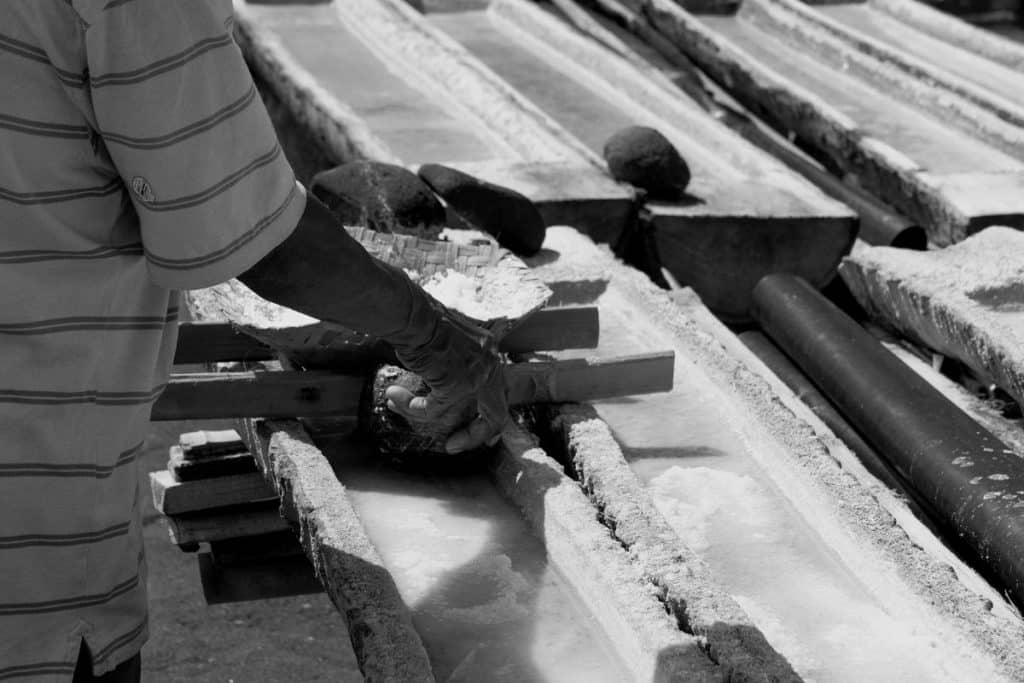
In a rapidly changing Bali, places like Pesinggahan Natural Salt Farmer preserve more than a product. They preserve a rhythm, a knowledge, and a relationship with the environment that has existed for generations. Watching the process unfold beside the ocean offers a different perspective on the island, one shaped less by tourism and more by patience, repetition, and daily work under the sun.
Beyond the beauty of the landscape itself, the experience reveals how deeply connected Balinese traditions remain to nature. From the movement of the tides to the intensity of the dry season, every part of salt farming depends on balance. Visiting these coastal farms is not only about discovering sea salt, but about understanding a quieter side of Bali that continues to endure along its shores.