

Exploring Sumatra: Jungle, islands and ancient cultures
Far from Bali, across the Java Sea and towards the western edge of Indonesia, lies an island that feels like another side of the country. Sumatra is huge. The landscapes change constantly as you travel across the island, from tropical rainforest and volcanic mountains to enormous lakes, small villages, remote islands and some of the wildest parts of Indonesia.
It is also one of the places where you can still experience cultures that feel very different from Bali. From the Minangkabau villages of West Sumatra to the Batak communities around Lake Toba and the Mentawai people living deep in the forests of Siberut, travelling here is as much about meeting people as it is about exploring the landscape.
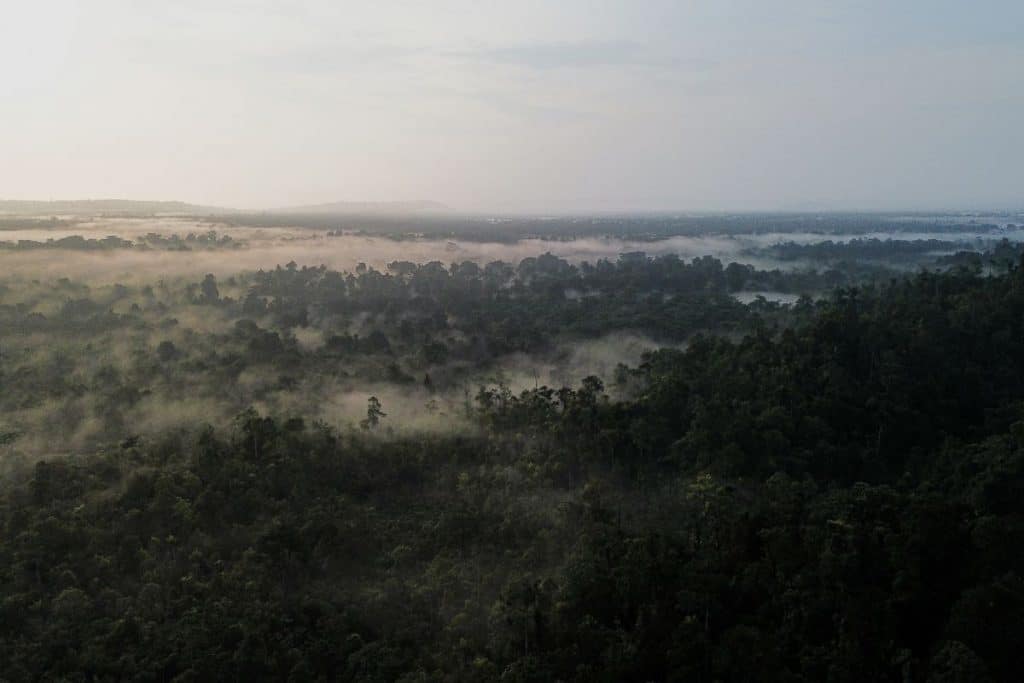
And then there is the jungle. Sumatra is one of the few places in the world where you can walk through rainforest and see wild orangutans moving through the trees. It is not an easy island to explore quickly. Distances are long, roads can be slow and some of the most interesting places take time to reach. But that is also what makes travelling through Sumatra feel so different.
Sumatra: A different side of Indonesia
Sumatra is huge. At around 473,000 square kilometres, it stretches for roughly 1,700 kilometres from north to south, crossing the Equator. The island is shaped by the Bukit Barisan mountains, with volcanoes, crater lakes, rainforest and highland valleys running through its centre. From one region to another, the landscape can completely change.
And getting there is already part of the adventure. From Bali, Padang is around 1,870 kilometres away as the crow flies, usually requiring a stopover. Once on the island, distances are long and some of the best places take time to reach. Roads give way to boats, jungle paths and mountain roads, making Sumatra feel much further from Bali than the distance on a map suggests.
What makes Sumatra even more interesting is how different its cultures are. Islam is the majority religion, while Christianity is particularly important in parts of North Sumatra. West Sumatra is home to the Minangkabau, the Mentawai have their own Indigenous culture, and the Batak people have their own traditions around Lake Toba. Travel across the island and the architecture, food, languages and traditions change with the landscape.
The Mentawai Islands
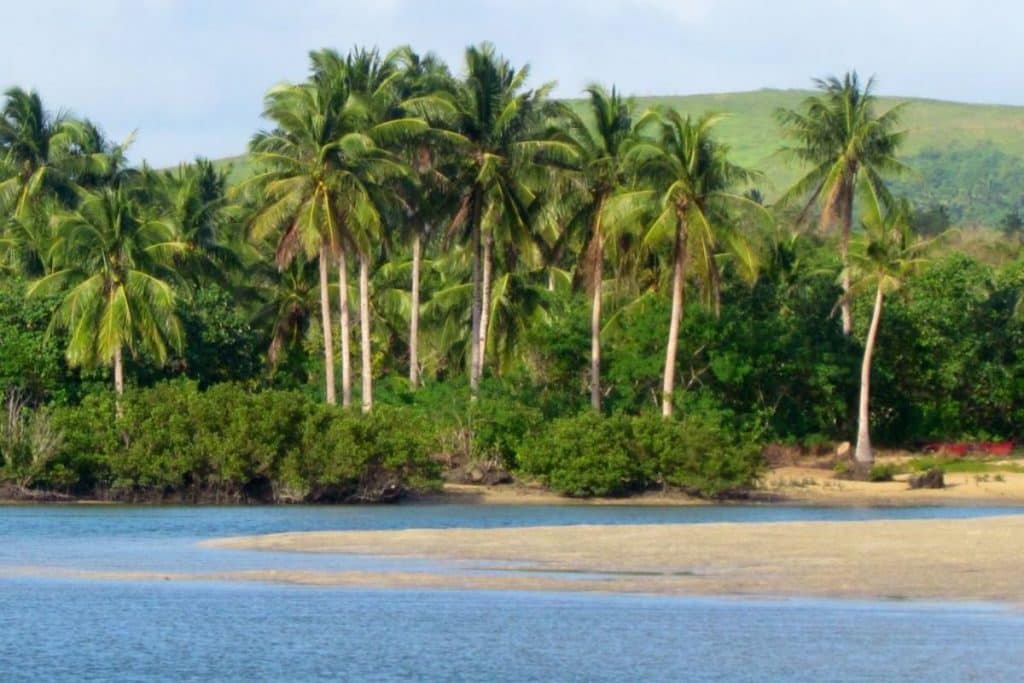
Around 150 kilometres off the western coast of Sumatra, the Mentawai Islands sit in the Indian Ocean. The archipelago has four main islands: Siberut, Sipora, North Pagai and South Pagai, surrounded by dozens of smaller islands. The islands are known around the world for their surf. Sipora and the Pagai Islands are home to some of Indonesia’s most famous waves, while the coastline is made up of jungle, beaches and small villages. But the Mentawais are much more than a surf destination.
The Mentawais are mainly about nature, surf and getting away from everything. You can spend days surfing, exploring beaches by boat, walking through the jungle, fishing, snorkelling or visiting small coastal communities. For a more comfortable stay, La Isla Mentawai offers private boutique villas surrounded by jungle and designed around a more contemporary, natural style. It combines the remote island setting with a level of comfort that is quite different from the traditional surf camps found across the Mentawais.
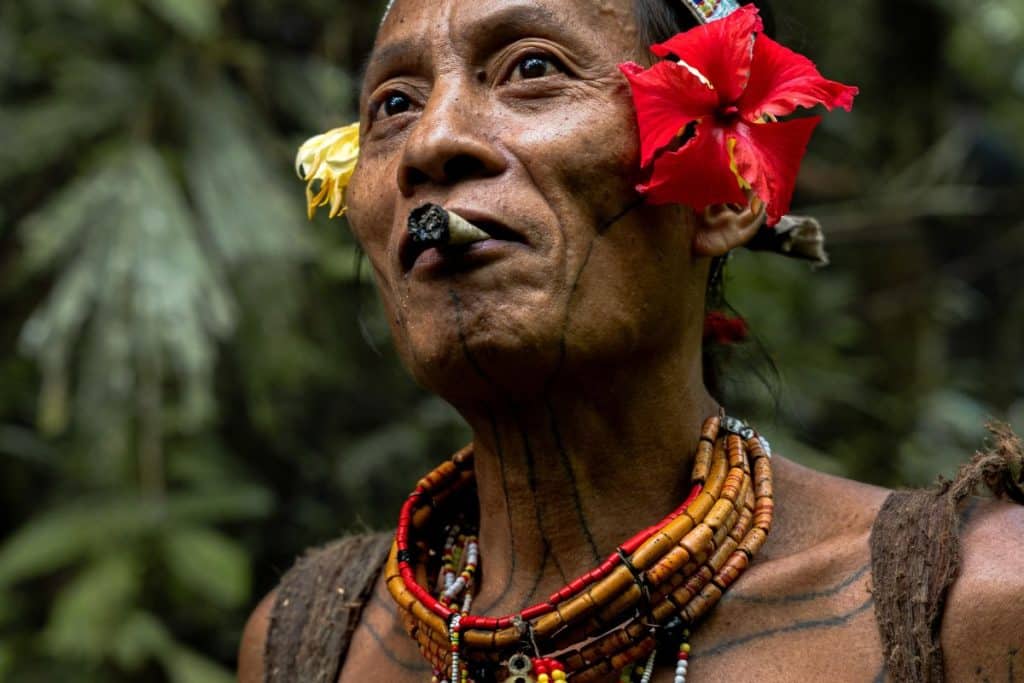
Siberut is the largest of the Mentawai Islands and the best place to experience Mentawai culture. We travelled with Mentawai Tribe, staying with a family in a traditional uma, eating together, fishing, walking through the forest, learning about traditional hunting and meeting a Sikerei, the traditional shaman. The Mentawai have a deep connection with the forest, which provides food, medicine and materials, while their traditional belief system, Arat Sabulungan, is based on a balance between people, nature and the spiritual world. Their traditional tattoos, known as titi, are also closely connected to identity and community.
Village, people & culture
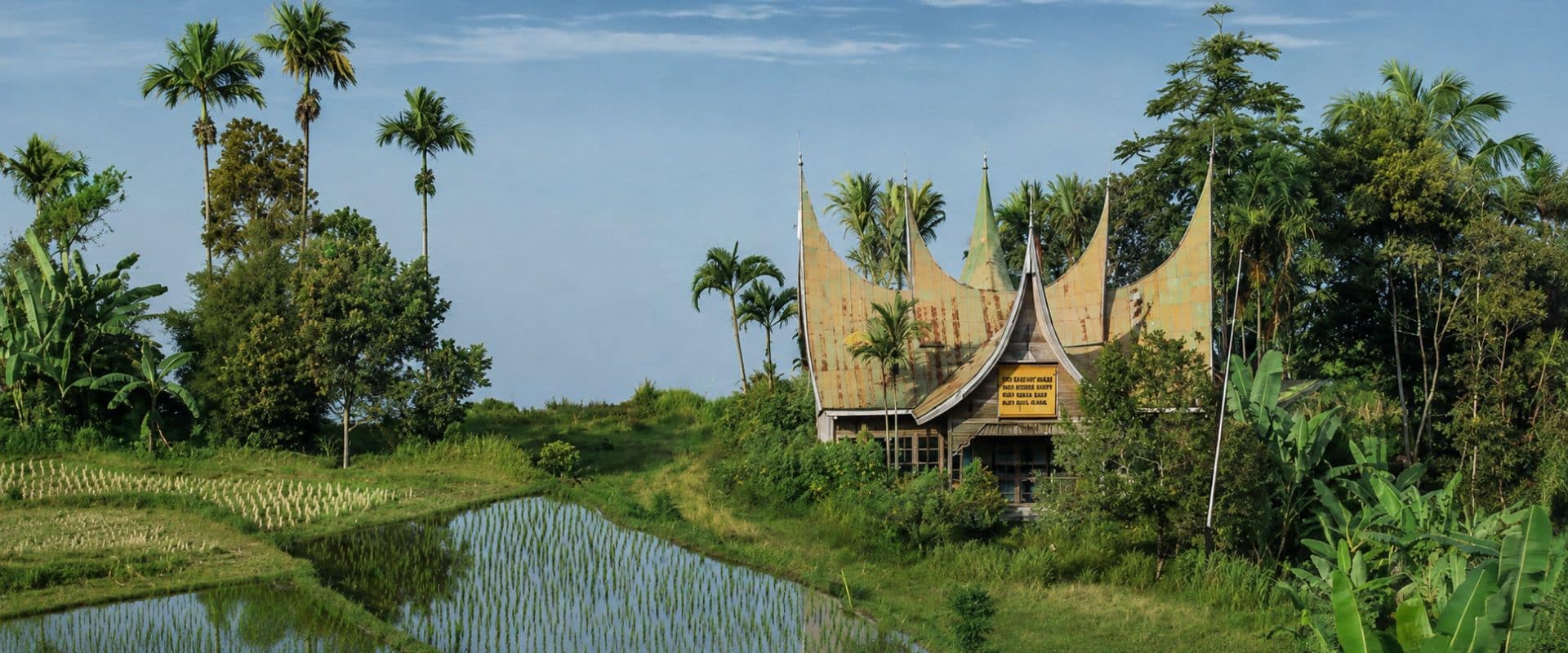
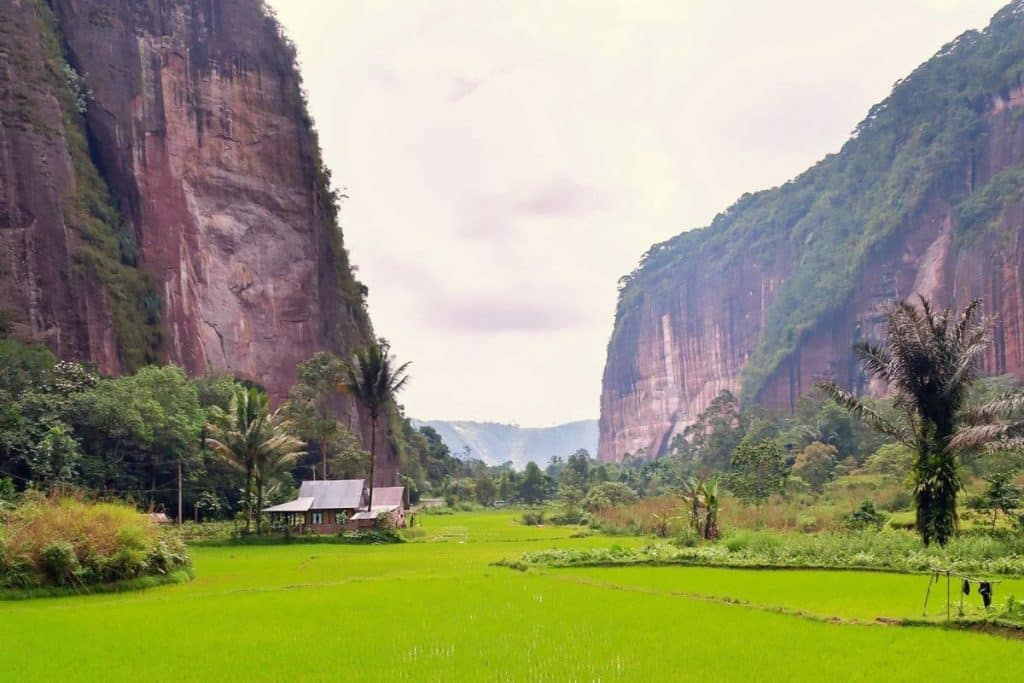
One of the best reasons to travel through Sumatra is to get away from the main cities. In West Sumatra, the Minangkabau culture is everywhere. The traditional houses, known as rumah gadang, are instantly recognisable with their dramatic curved roofs. Small villages and green valleys are surrounded by rice fields, mountains and forests. Places around Bukittinggi , Pariangan and the Harau Valley are a good starting point for exploring this part of the island.
The Minangkabau have one of the world’s largest matrilineal societies, where family descent and inheritance traditionally follow the mother’s line. Their culture is also deeply connected to Islam, with traditions and everyday life shaped by both. Further south, around Kerinci, the landscape becomes more mountainous, with tea plantations, forests and small villages set between the mountains. It is another part of Sumatra where you can slow down and explore the landscape by road, on foot or through the villages.
Sumatra is full of these smaller places where the landscape and culture are still closely connected. Travelling between villages, rice fields, forests and mountain valleys gives you a different perspective of the island, away from the main tourist routes.
Into the jungle
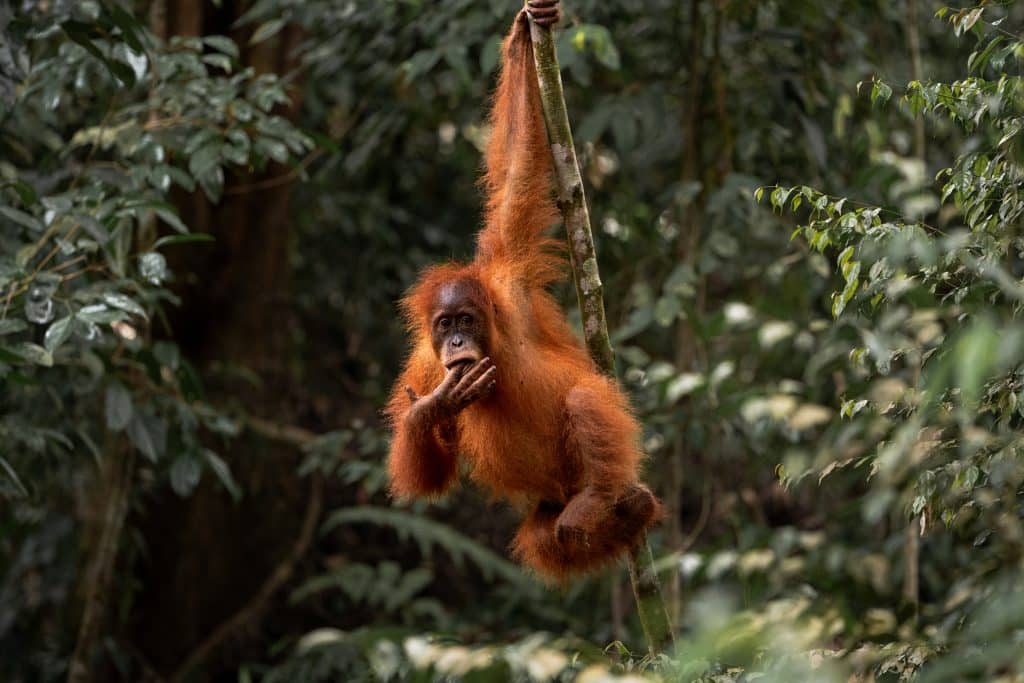
Then there is the reason many people come to Sumatra in the first place: the jungle. In the north, Bukit Lawang sits on the edge of Gunung Leuser National Park, one of the most important rainforest areas in Southeast Asia. This is one of the few places where you can trek through the forest and encounter wild Sumatran orangutans. You never know exactly what you will see. Some days the forest is quiet, with only insects, birds and the sound of the river. Other days, an orangutan appears high in the canopy and moves through the trees above you.
The experience is very different from seeing animals in a sanctuary or zoo. You are walking through their environment, and encounters are completely unpredictable. For a deeper jungle experience, you can spend several days trekking with a local guide, sleeping in the rainforest and exploring further away from the village. The area is also home to other wildlife, including Thomas leaf monkeys, gibbons, macaques and, deeper in the park, elephants and the extremely rare Sumatran tiger.
Volcanoes & lakes
Sumatra is also a place for people who love mountains. The island follows the volcanic Ring of Fire, with volcanoes running along the Bukit Barisan range. Around Berastagi, you can climb Mount Sibayak, an accessible volcano surrounded by highland landscapes and geothermal activity. Further south, Mount Kerinci is the highest volcano in Indonesia and one of the most impressive places for serious trekkers.
For something quieter, Lake Maninjau is a volcanic lake surrounded by green mountains and small villages in West Sumatra. Not far from Bukittinggi, it is a place to drive around the lake, stop in the villages and take in the landscape. Further south, Lake Kerinci sits between mountains and forests, while Lake Ranau, on the border of South Sumatra and Lampung, offers another landscape of volcanic mountains and water.
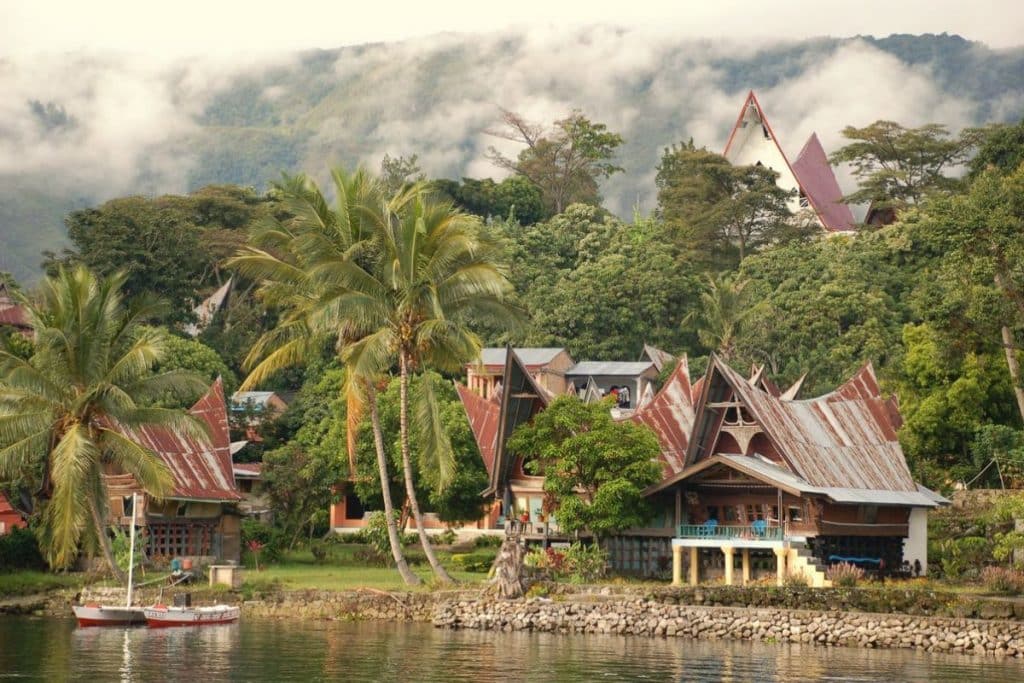
And then there is Lake Toba. At more than 1,100 square kilometres, the lake is enormous. Mountains rise around the water and Samosir Island sits in the middle, creating a landscape that feels almost impossible to associate with Indonesia’s more familiar tropical coastlines. You can spend days exploring the lake, hiking, swimming, visiting Batak villages or simply following the roads around Samosir. .
Sumatra is not the easiest part of Indonesia to explore. The distances are big, transport can take longer than expected, and some places require boats, long drives or several different forms of transport. But that is exactly why it feels different. You can travel from a city to a traditional village, from a volcanic lake to a jungle where orangutans still live, and then cross the ocean to an island where people continue traditions that have existed for generations.
For us, that is the real reason to explore Sumatra. It is not one destination, but a collection of landscapes, cultures and experiences that feel completely different from Bali, and sometimes completely different from one another. Some places stay with you because they are beautiful. Others stay with you because of the people you met there. Sumatra is one of those places.