

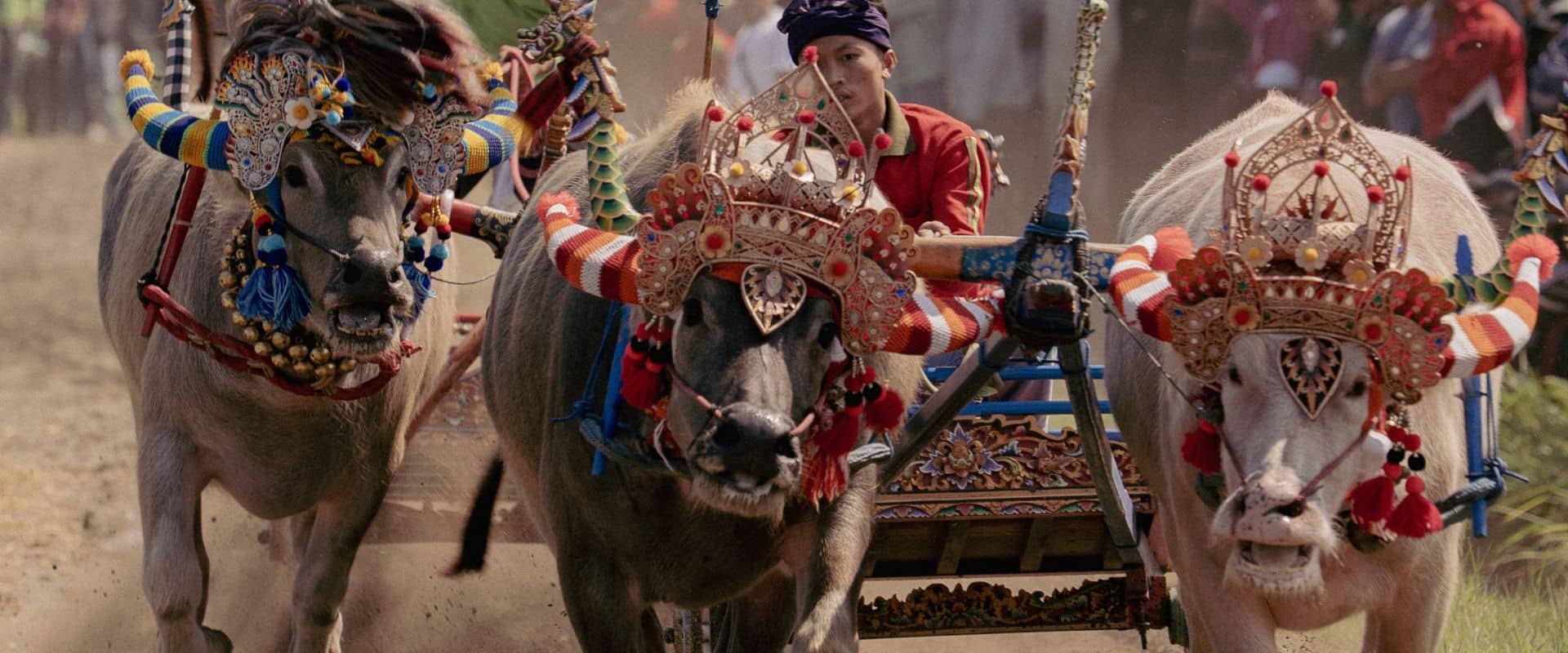
Makepung: The Traditional Bullock Race of Bali
In the quiet countryside of Jembrana, the sound of cheering crowds and galloping bullocks signals the start of one of the island’s most unique cultural events: the Makepung race. Originally created by local farmers, Makepung has evolved into a celebration of Balinese heritage, bringing villages together through friendly competition and generations of tradition. Today, these spectacular races remain an authentic experience where culture, craftsmanship, and community take center stage.
Whether you’re planning a trip to West Bali or simply curious about one of the island’s oldest traditions, this guide covers everything you need to know about Makepung, from its fascinating history and how the races work to the best time and place to experience them yourself.
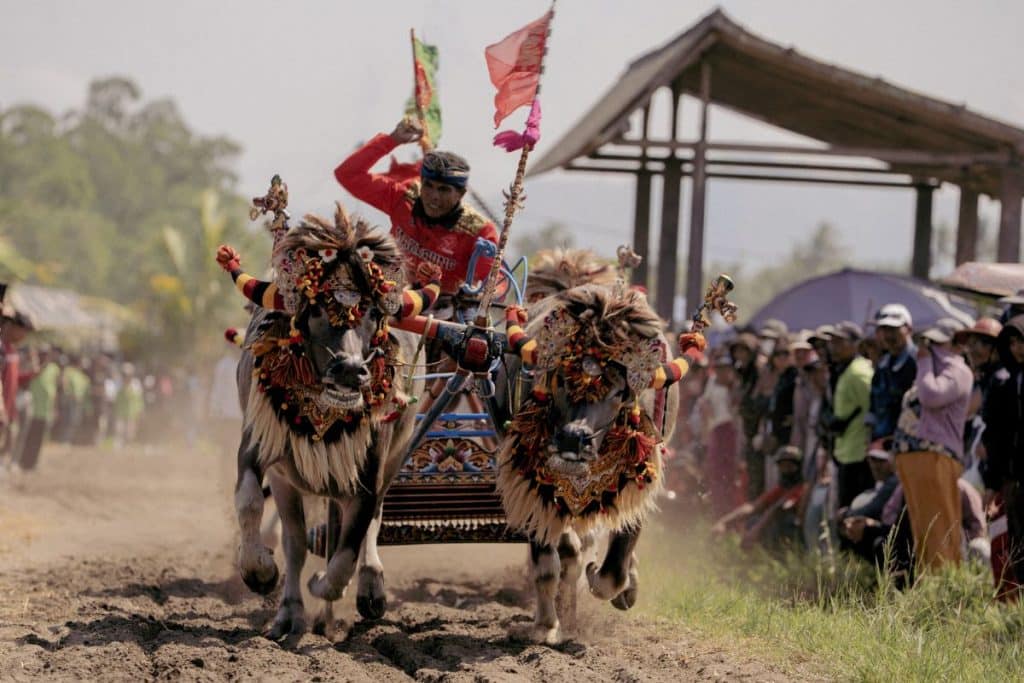
A tradition rooted in Bali's countryside
While Bali is often associated with temples, beaches, and lush rice terraces, the island is also home to traditions that have shaped local communities for generations. In the western regency of Jembrana, one of these traditions comes to life through Makepung, an exhilarating bullock race that continues to bring villages together year after year.
Originally born from everyday agricultural life, Makepung has grown into one of Bali’s most distinctive cultural events. What began as friendly competitions between farmers has evolved into an organised championship that celebrates craftsmanship, teamwork, and local pride while preserving an important part of the island’s heritage.
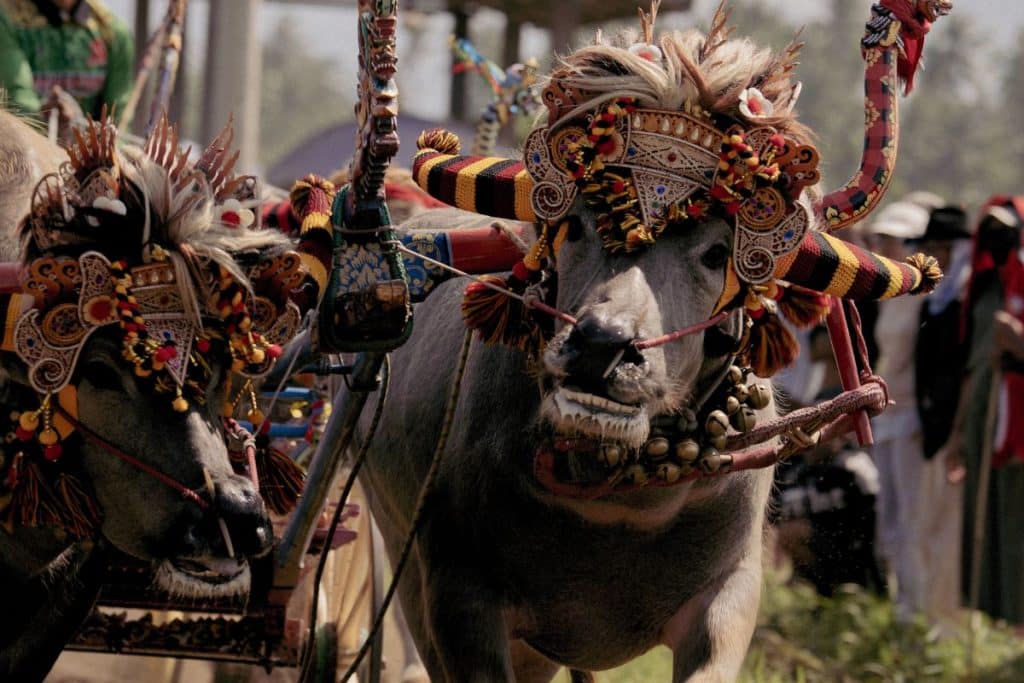
More than a race
Makepung is far more than a test of speed. Every race reflects months of preparation, from training the bullocks to carefully decorating them with colourful harnesses, bells, carved ornaments, and traditional accessories. Owners take immense pride in presenting their animals, knowing that a victory brings prestige not only to them but also to their family and village.
The races themselves follow unique rules that differ from conventional competitions, making Makepung unlike anything most visitors have seen before. Combined with the lively atmosphere, traditional music, and enthusiastic local supporters, the event becomes a celebration of Balinese culture as much as a sporting competition.
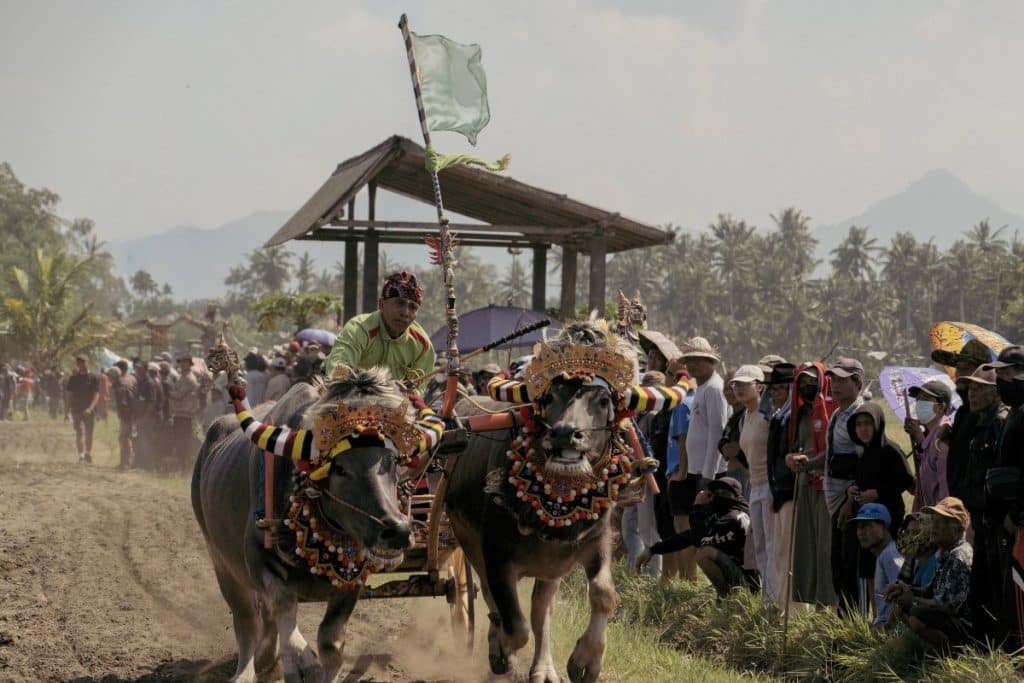
An experience worth discovering
Unlike many attractions designed for tourists, Makepung remains a tradition first and foremost for the local community. Held on dedicated racing circuits across Jembrana, including Sanghyang Cerik, Kaliakah, Pengambengan, and Delod Berawah, each event offers visitors the opportunity to witness an authentic side of Bali that few travellers experience.
Whether you’re passionate about culture, photography, or simply looking to explore beyond Bali’s best-known destinations, attending a Makepung race is an unforgettable experience. In this guide, you’ll discover the history behind the tradition, how the races work, where to watch them, and why Makepung remains one of Bali’s most remarkable cultural events.
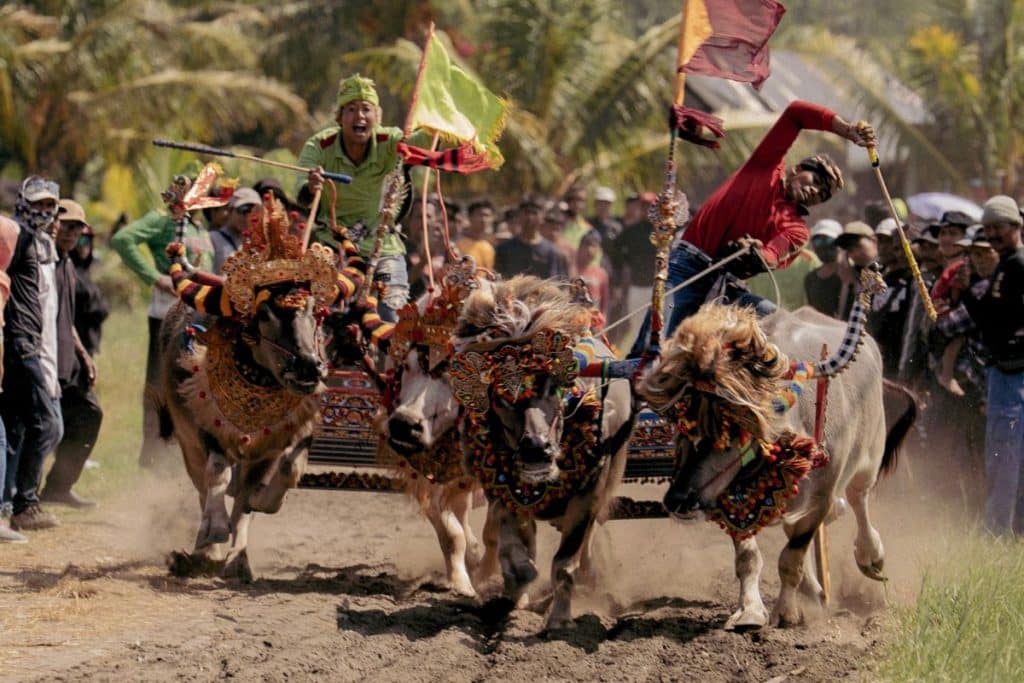
More than a race, Makepung is a living tradition that continues to reflect the history, values, and agricultural heritage of West Bali. Every event showcases not only the strength and beauty of the bullocks but also the dedication of the communities who have preserved this remarkable custom for generations.
If you’re looking to discover a different side of Bali, away from the island’s busiest tourist attractions, attending a Makepung race is an experience well worth adding to your itinerary. It’s a chance to witness a tradition that remains deeply rooted in local life while enjoying one of Bali’s most exciting and memorable cultural events.