

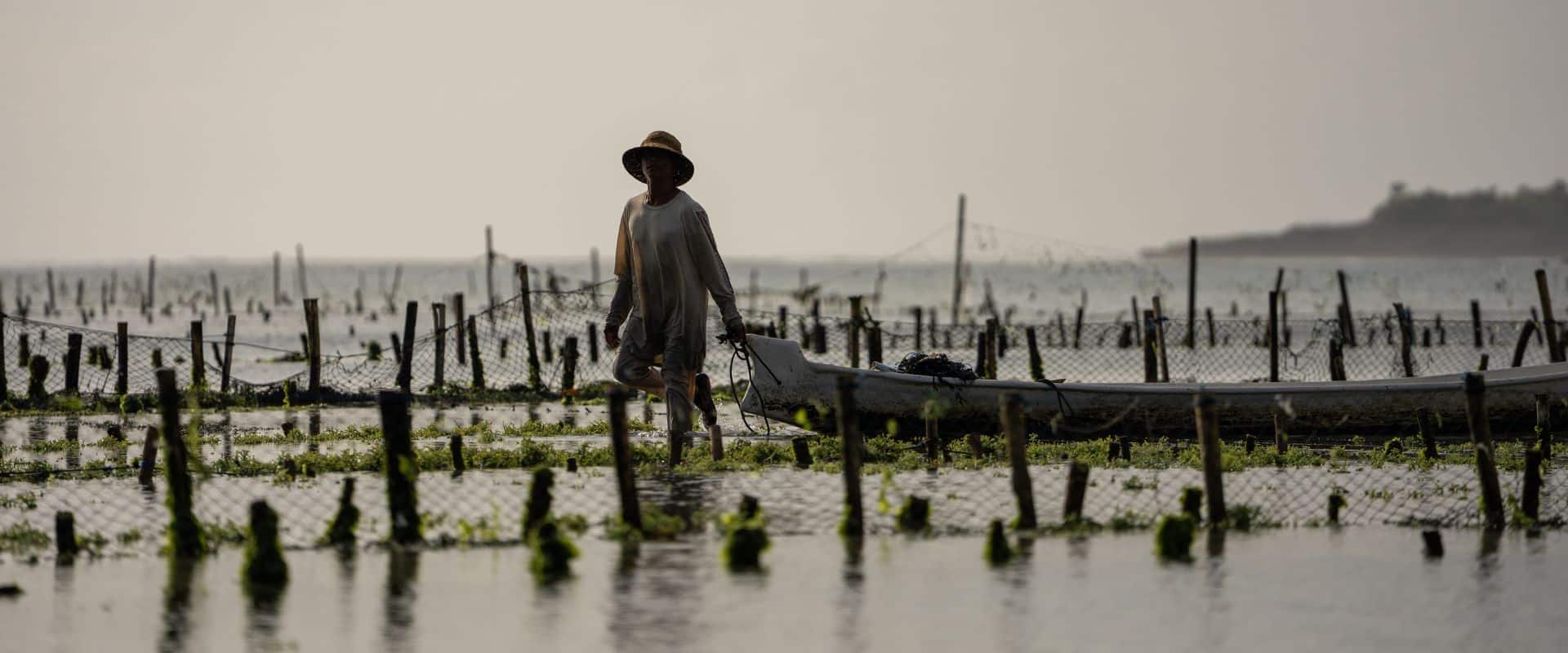
The seaweed fields of Nusa Lembongan
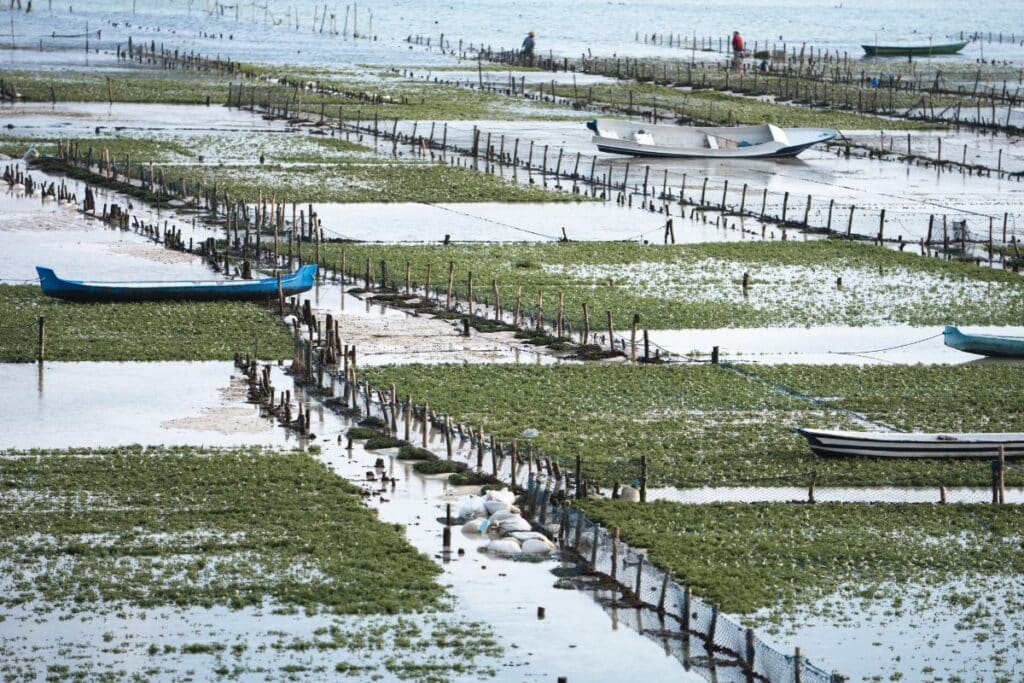
Between Nusa Lembongan and Nusa Ceningan, the shallow waters reveal a different side of island life. Beyond the boats and coastal cafés, rectangular patches of seaweed stretch across the seabed, marking the working grounds of local farming families. At low tide, farmers walk through the water to tend their crops, collect mature seaweed and prepare new lines for the next cycle. It is an activity that has been part of the island’s economy for decades, long before tourism became its main source of income.
Seaweed farming is often overlooked by visitors, despite its importance to the communities who live here. The crop is grown for international markets, where it becomes an ingredient in food, cosmetics and other everyday products. Behind this trade is a demanding process shaped by tides, weather and market prices. It is also a story of how Nusa Lembongan has changed, and how some families continue to maintain a livelihood closely connected to the sea.
A livelihood rooted in the sea
Seaweed cultivation arrived in Nusa Lembongan in the early 1980s and quickly became an important source of income for coastal households. The shallow, clear waters between Lembongan and Ceningan offered suitable conditions for growing seaweed, while the sheltered channel provided accessible areas for cultivation. Over time, farming expanded across the coastline, becoming an established part of the local economy. For many families, the income helped cover daily expenses, support children’s education and provide a degree of independence from seasonal fishing activities.
During the 1980s and 1990s, seaweed was one of the island’s most important industries. Its influence extended beyond the people directly involved in cultivation: preparing seedlings, harvesting, drying and selling the crop involved different members of the community. Knowledge was passed between generations, with families learning to understand the tides, recognise healthy plants and manage their plots. The work became part of everyday life, with the sea serving not only as a natural environment but also as a place of work and economic activity.
How seaweed is grown
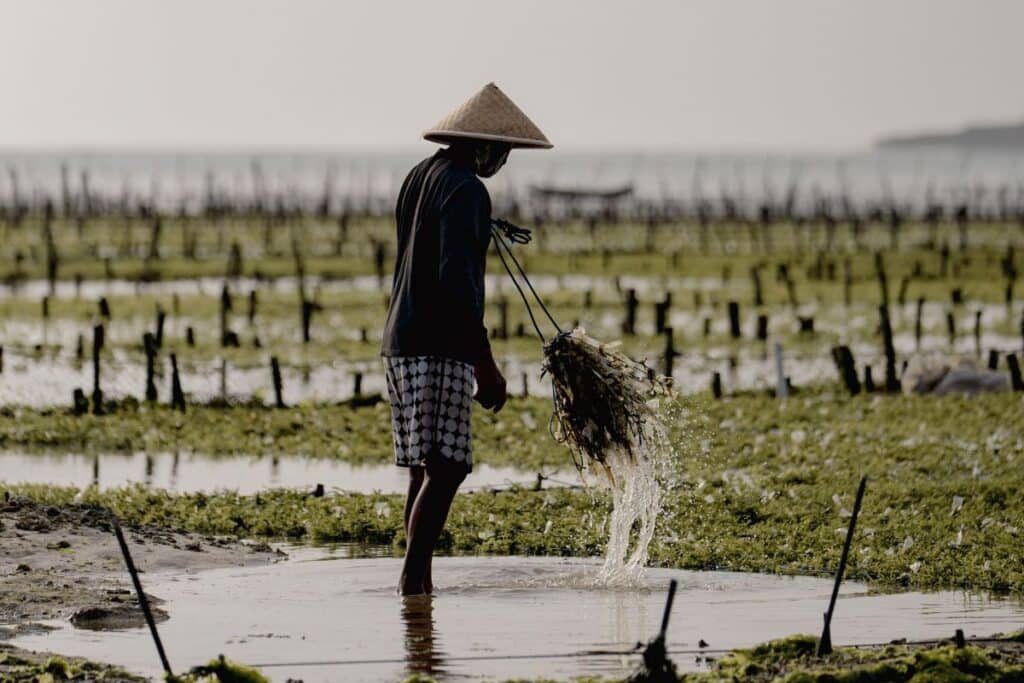
The cultivation process begins with small pieces of healthy seaweed selected from an earlier harvest. Unlike land-based crops, seaweed does not need seeds to reproduce. Small cuttings are tied by hand to long nylon lines, with each piece spaced carefully to allow room for growth. These lines are then secured underwater within designated farming plots, often marked by wooden stakes. The method is relatively simple, but it requires consistency and attention. Farmers need to check their crops regularly, remove damaged sections and make sure the lines remain properly positioned as the tides and currents change.
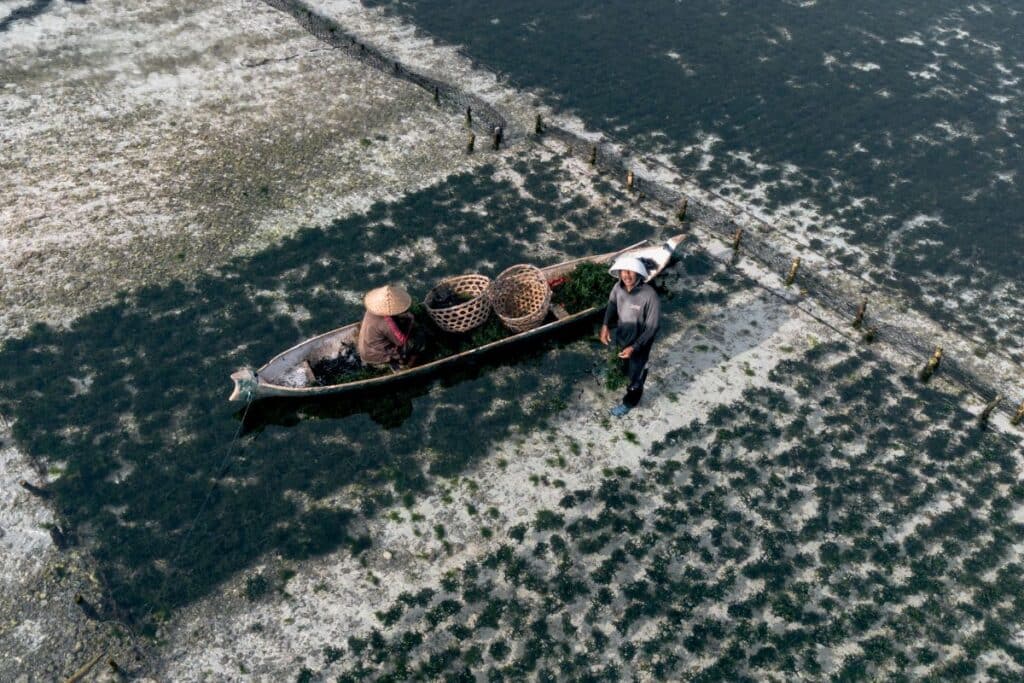
After approximately 35 days, depending on growing conditions, the seaweed can be harvested. Farmers collect the mature plants and transport them back to shore, where the next stage begins: drying. Fresh seaweed contains a large amount of water, meaning its weight can decrease considerably during this process. It is spread out under the sun, often on open ground or drying surfaces, and turned to ensure it dries evenly. Once ready, it is gathered, sorted and sold to local collectors. Part of a harvest may also be kept to provide seedlings for the next growing cycle, reducing the need to purchase new planting material.

From coastal farms to global products
The seaweed grown around Nusa Lembongan is part of a much larger supply chain. Certain varieties, including Eucheuma and Kappaphycus seaweeds, are valued for their carrageenan content. Carrageenan is extracted and used as a thickening, stabilising and gelling ingredient across several industries. It can be found in products such as dairy alternatives, processed foods, personal care products and cosmetics. This means that a crop harvested in the shallow waters of a small Indonesian island can eventually become an ingredient in products sold around the world.
Once dried, the seaweed is generally sold to local collectors, who gather produce from different farming families before it moves towards processors and larger buyers. Some of the harvest is transported to other parts of Bali, including Kusamba, and onward to processing centres such as Surabaya. The quality of the dried crop, its moisture content and the prevailing market price all influence how much farmers receive. For producers, this creates a direct link between their daily work and international demand, even though they may have little control over the final value of the product.
Where to see the seaweed farms
One of the best places to see the seaweed farms is around the Yellow Bridge, which connects Nusa Lembongan to Nusa Ceningan. From here, you can look down over the shallow waters and spot the farming plots spread across the channel. For a closer look, explore the nearby coastal paths where local farmers prepare their lines, harvest the seaweed and lay it out to dry. The best time to visit is usually around low tide, when the farms are more visible. Early morning offers beautiful light and a chance to see farmers at work, while late afternoon can be lovely for photography.
If you come across farmers working, take the opportunity to greet them and ask a little about what they do. A friendly approach goes a long way, but always ask permission before taking close-up photographs. Remember that these are working farms and an important source of income for local families, so avoid walking over the lines or touching the crops. A little curiosity and respect can turn a simple stop into a more meaningful glimpse of everyday life on the island.
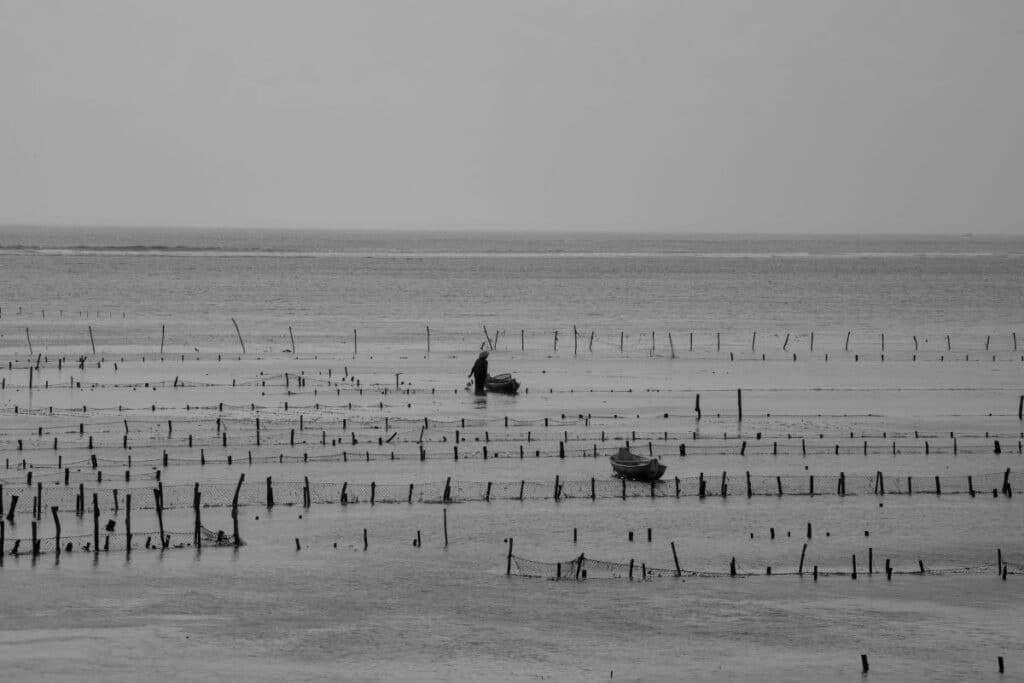
The seaweed fields offer a useful perspective on Nusa Lembongan beyond its familiar image as a holiday destination. They show how local livelihoods depend on the condition of the surrounding waters, the availability of working space and markets that extend far beyond the island itself. They also reveal the amount of knowledge and coordination behind a crop that can easily go unnoticed from the shore.
For visitors, taking the time to observe the farmers at work is a simple way to understand more of the place they have come to explore. The island’s identity is shaped not only by its beaches and hospitality, but also by the people whose daily routines remain connected to the sea.
And once you’ve discovered this quieter side of the island, there is another worth exploring: our guide to the best addresses in Nusa Lembongan, from independent cafés and local restaurants to beautiful places to stay and slow down.