

Gebug Ende: The Traditional Stick Fights of East Bali
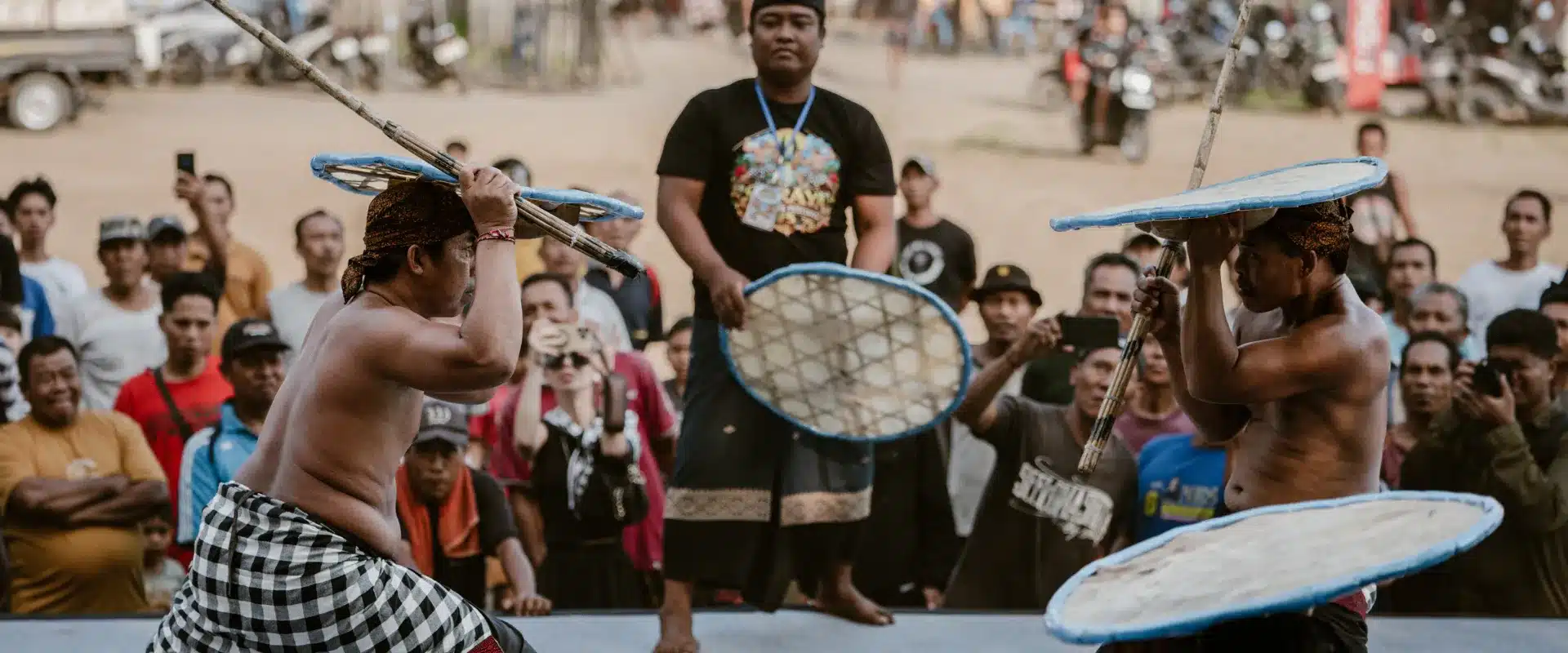
In the village of Seraya, in East Bali, two men face each other with long rattan sticks and traditional round shields. Known as Gebug Ende, this traditional fighting ritual has been passed down through generations and remains an important part of local culture.
More than a physical contest, it is rooted in local beliefs and was traditionally performed during the dry season to ask for rain. Today, it offers a fascinating glimpse into Bali’s cultural heritage and the traditions that continue to connect its communities with their past.
The Origins of Traditional Fighting in Bali
Traditional fighting has long been part of Balinese village life, where physical contests were often connected to religious ceremonies, agricultural cycles and community gatherings. These practices were not simply about strength or competition; they also reflected the relationship between people, their environment and their spiritual beliefs.
Gebug Ende originated in Seraya, a village in Karangasem, on the dry eastern coast of Bali. Unlike the island’s greener central regions, this area has traditionally experienced long dry periods, making rainfall particularly important for local agriculture. According to local tradition, the fights were organised during the dry season as a ritual to ask for rain and encourage a successful harvest.
Over time, Gebug Ende became an important part of Seraya’s cultural identity. Although the tradition has evolved and is now also presented during cultural celebrations, it continues to connect younger generations with the customs and beliefs of their ancestors.
More Than a Fight: Village Rivalries and Cultural Beliefs
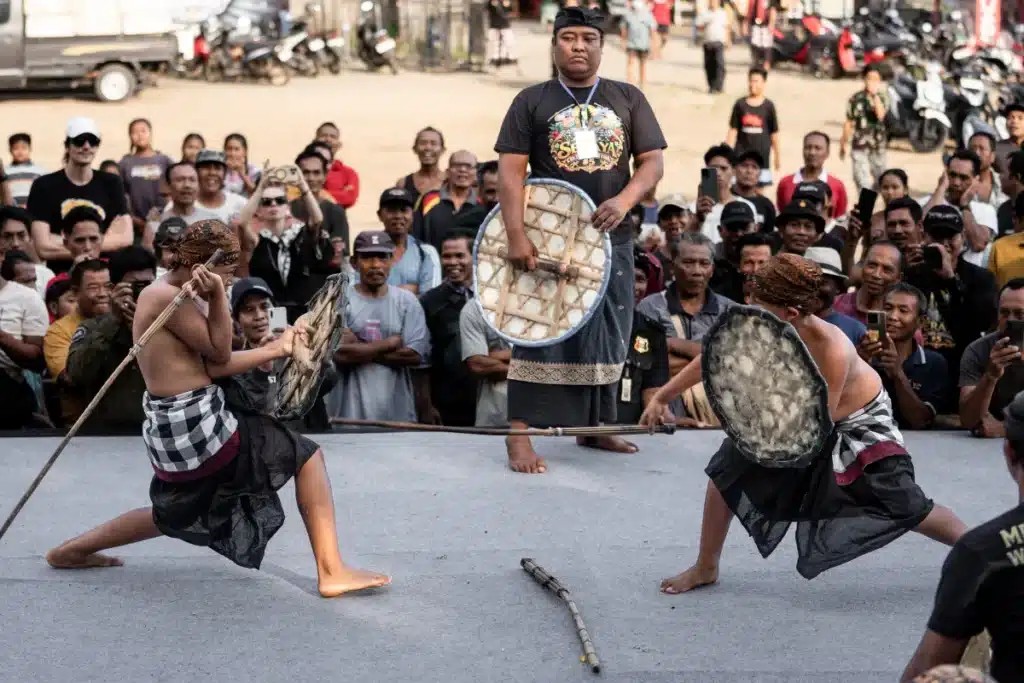
Gebug Ende is more than a physical contest between two men. Traditionally, encounters could involve participants from neighbouring villages, creating an atmosphere of friendly rivalry and bringing communities together. In the past, these encounters could be intense and sometimes lead to injuries. Today, Gebug Ende is generally practised in a more controlled way, with traditional rules and referees overseeing the fights, allowing the ritual to continue while preserving its cultural significance.
The ritual is particularly interesting because of its connection to local beliefs about rain. Some traditional interpretations associate the appearance of blood during a fight with the hope that rainfall will soon follow. This belief reflects the importance of agriculture in Seraya, where the arrival of rain can mean the difference between a difficult season and a successful harvest.
Despite the physical confrontation, the purpose is not to settle personal disputes or encourage uncontrolled violence. The fighters participate in a shared ritual that reflects courage, respect and community identity. It is this combination of physical challenge and spiritual meaning that makes Gebug Ende such a distinctive part of Balinese heritage.
The Rules, Weapons and Ritual Behind Gebug Ende
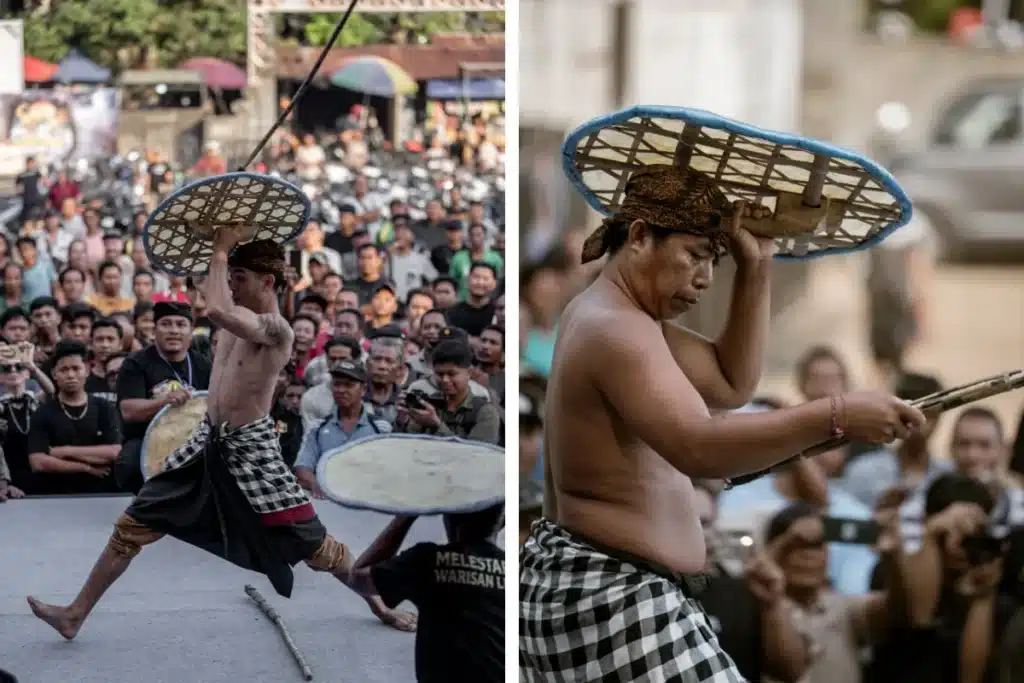
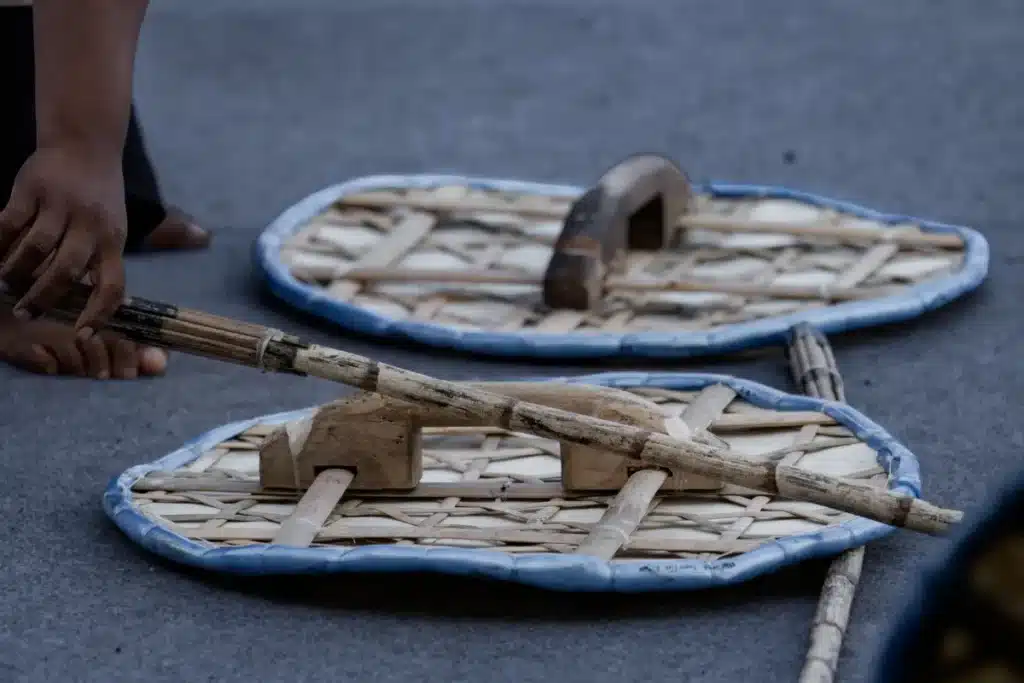
Each fighter enters the arena carrying two traditional objects: a long rattan stick known as the penyalin and a round shield called the ende, traditionally made from dried cowhide stretched over a wooden frame. The stick is used to strike the opponent, while the shield provides protection against incoming blows. Together, they create a fighting style that requires both physical strength and quick reactions.
The encounters take place one against one, with participants taking turns attacking and defending. Balance, timing and agility are essential, as the fighters must find openings in their opponent’s defence while protecting themselves. Unlike a choreographed performance, the strikes involve genuine physical contact and can leave visible bruises or cuts.
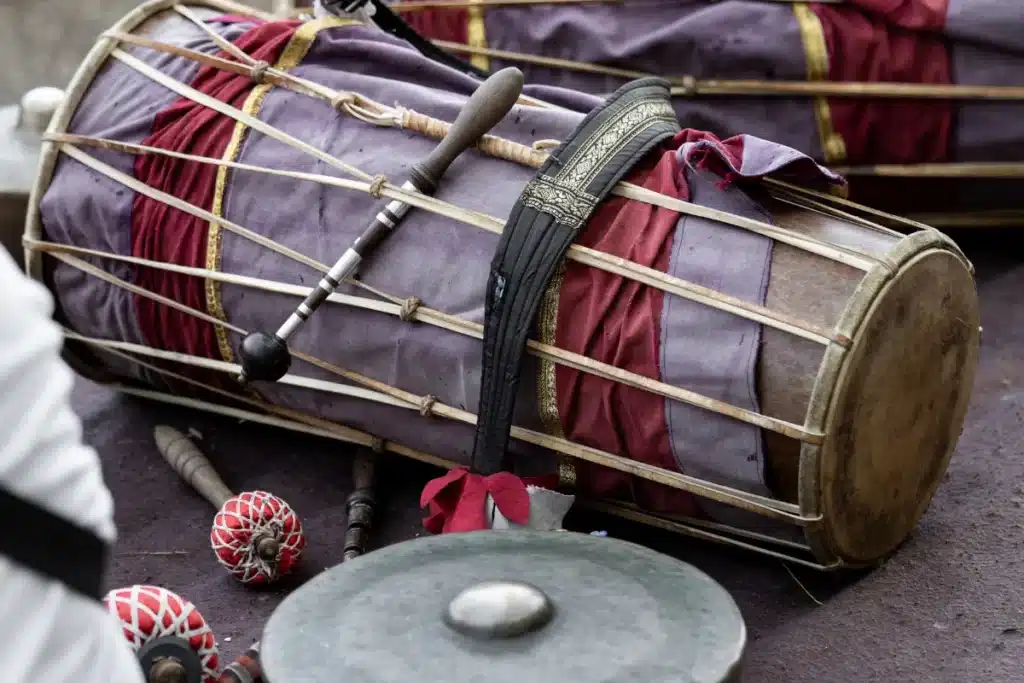
Traditional referees, known as saye, supervise the matches and make sure participants respect the established rules. Their presence helps keep the encounters under control while preserving the traditional nature of the ritual. Traditional Balinese percussion often accompanies the fights, adding rhythm to the action as spectators gather around the arena to watch and encourage the participants.
Beyond Bali: Traditional Fighting Across Indonesia
Gebug Ende is part of a much wider tradition of ritual combat across Indonesia. With its many islands and diverse cultural groups, the archipelago is home to numerous fighting practices, each reflecting local histories, beliefs and community traditions.
On neighbouring Lombok, the Sasak people practise Peresean, a traditional fight between two men using rattan sticks and large shields made from buffalo hide. Historically associated with warrior training, the practice is also connected to local beliefs about bringing rain during the dry season. Today, Peresean remains an important part of Sasak cultural celebrations, combining physical skill, traditional music and community spirit.
Further east, on the island of Sumba, Pasola offers a very different spectacle. Groups of men ride horses and throw wooden spears at opposing riders as part of an ancestral ritual connected to the Marapu belief system. Held around the appearance of nyale, a type of sea worm found along the coast, Pasola is closely linked to agricultural fertility and hopes for a successful harvest.
In Flores, particularly among the Manggarai people, Caci combines traditional whip fighting, dance and music. Two men face each other using whips made from buffalo hide and protective shields, taking turns to attack and defend. Often performed during important celebrations, it represents courage, sportsmanship and community identity. Beyond these regional traditions, Indonesia is also home to Pencak Silat, a traditional martial art combining self-defence, physical training and artistic movements, recognised by UNESCO as Intangible Cultural Heritage in 2019.
Although these practices differ considerably, they share an important connection: each has been passed down through generations as a way of preserving local history, beliefs and cultural identity. They offer a fascinating insight into the diversity of Indonesia, where traditional fighting is often about much more than the fight itself.
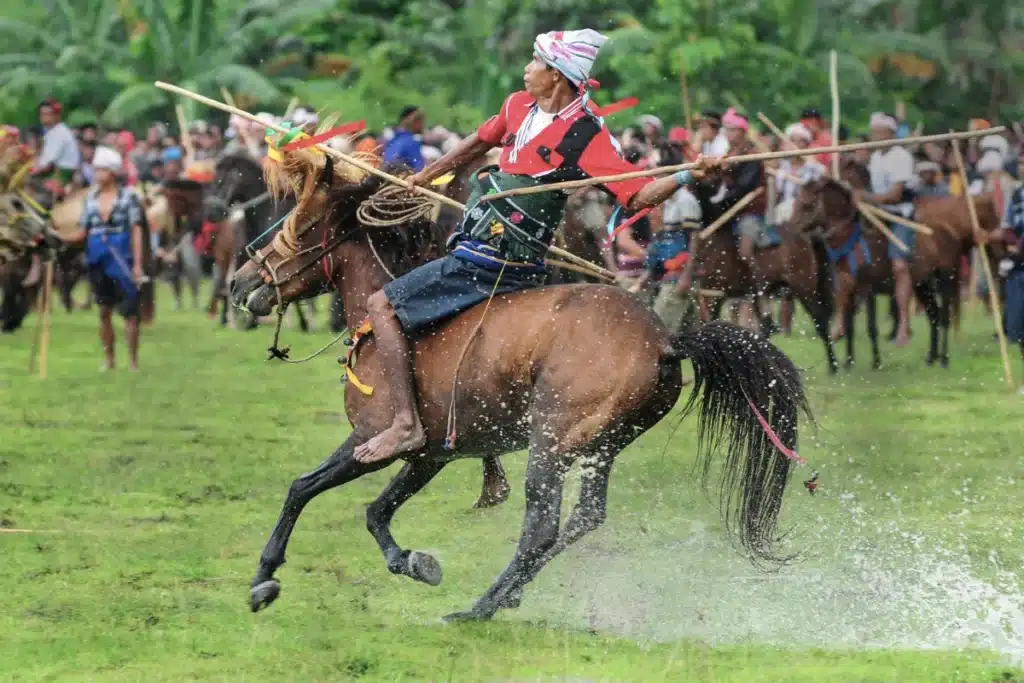
From the rattan sticks of Bali and Lombok to the horseback encounters of Sumba, Indonesia’s traditional fighting practices reveal a fascinating side of the archipelago’s cultural heritage.
Gebug Ende is more than a spectacle. It tells the story of Seraya, its people and their relationship with the land. For travellers looking beyond Bali’s familiar attractions, discovering these traditions offers a deeper understanding of the island and the communities that keep its history alive.